


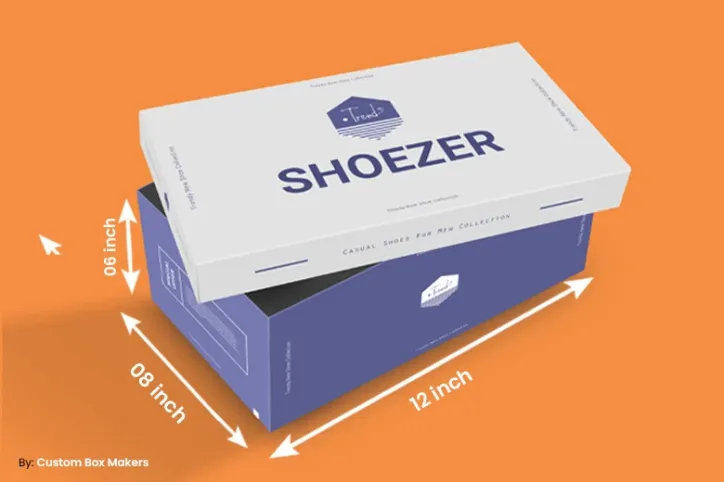

Shoe Box Dimensions: Standard Sizes, Measurements & Size Guide
Shoe box dimensions vary by footwear size, style, packaging material, and how the shoes will be stored or shipped. Sneakers, high heels, boots, and children’s shoes can all require different box dimensions.
For most adult footwear, a shoe box commonly falls within a general range of about 12–14 inches in length, 7–9 inches in width, and 4–6 inches in height. These are reference ranges rather than fixed industry standards, so the actual box should be sized around the shoes it will contain.
If you are ordering custom shoe boxes, understanding the difference between length, width, height, internal dimensions, and external dimensions can help you choose a box that fits your footwear without unnecessary empty space.
Why Do Shoe Box Dimensions Matter?
The right shoe box dimensions help protect footwear while making storage, shipping, and packaging operations more efficient.
A box that is too small can compress the shoes or damage their shape. A box that is too large can allow the footwear to move around during transportation and create unnecessary empty space.
Correct sizing also matters for e-commerce shipping because the finished external dimensions can affect package volume and, depending on the carrier and service, dimensional-weight charges.
For footwear brands, the goal is to create enough internal space for the shoes and any required tissue paper, shoe forms, inserts, or protective wrapping without making the package unnecessarily large.
What Is the Standard Shoe Box Size?
There is no single standard shoe box size that fits every footwear product. However, many adult shoe boxes fall within approximately 12–14 inches long, 7–9 inches wide, and 4–6 inches high.
A commonly used reference size for adult footwear is around 13 × 8 × 5 inches (33 × 20.3 × 12.7 cm).
The actual dimensions can change according to:
- Shoe size
- Shoe style
- Sole thickness
- Heel height
- Ankle or shaft height
- Packaging materials
- Tissue paper or inserts
- Whether one box must accommodate multiple shoe sizes
These measurements should therefore be treated as starting points rather than universal specifications.
Standard Shoe Box Dimensions by Category
The following ranges provide practical starting points for different footwear categories. Actual dimensions should be confirmed by measuring the shoes and considering the way they will be packed.
| Shoe Category | Length | Width | Height |
|---|---|---|---|
| Men’s standard shoes | 13–14 in | 8–9 in | 4.5–5.5 in |
| Women’s standard shoes | 12–13 in | 7–8 in | 4–5 in |
| Children’s shoes | 9–11 in | 6–7 in | 3–4 in |
| Sneakers / athletic shoes | 13–14.5 in | 8.5–9.5 in | 5–6 in |
| Boots | 14–16 in | 9–11 in | 5.5–9 in |
| High heels | 12.5–14 in | 7.5–8.5 in | 4–5.5 in |
These are reference ranges, not fixed box standards. Bulky sneakers, high-top footwear, boots, and shoes with unusual shapes may require additional space. Current packaging guides similarly treat standard dimensions as ranges rather than one universal size.
For a broader overview of commonly used packaging dimensions, see our standard box sizes guide.
Internal vs. External Shoe Box Dimensions
Understanding internal and external measurements is essential when ordering shoe packaging.
Internal dimensions describe the usable space inside the finished box. These measurements determine whether your shoes will actually fit.
External dimensions describe the outside measurements of the finished box. They are important for storage, stacking, warehouse planning, and shipping calculations.
For example, a box listed as 13 × 8 × 5 inches internally will have larger external dimensions because the board and construction add thickness to the finished package.
When ordering custom shoe boxes, always confirm whether the dimensions provided by your packaging supplier are internal or external.
How to Measure a Shoe Box Correctly
You can measure an existing shoe box with a ruler or measuring tape. If you are developing a new box, measuring the shoes themselves is usually more useful because the final box needs to accommodate the actual product.
Measure the box or footwear in this order:
1. Measure the Length
Length is the longest horizontal dimension of the box.
If you are measuring the shoe, measure from the back of the heel to the furthest point at the toe. Check both shoes if their shapes differ.
2. Measure the Width
Width is the shorter horizontal dimension across the box.
For the footwear itself, measure across the widest part of the shoe, usually around the forefoot.
3. Measure the Height
Height is the vertical distance from the bottom of the box to the top of the available internal space.
For shoes, consider the highest part of the footwear, such as a raised tongue, ankle collar, heel, or boot shaft.
4. Account for Packing Materials
After measuring the footwear, determine whether you will use tissue paper, shoe forms, inserts, dust bags, or other protective materials.
The required clearance depends on the footwear and packing method. Do not apply one fixed clearance amount to every shoe style.
5. Confirm the Fit With a Sample
Before producing a large quantity, test the actual shoes inside a sample box. Check that the lid closes properly, the footwear is not compressed, and the shoes do not move excessively during handling.
Shoe Box Dimensions for Different Types of Shoes
Different footwear styles require different packaging dimensions because their shapes and profiles are not the same.
High Heel Shoe Box Dimensions
High heels may require additional height because of the heel, toe shape, and overall profile of the shoe.
A practical starting range is:
- Length: 12.5–14 inches
- Width: 7.5–8.5 inches
- Height: 4–5.5 inches
The final height should account for the highest part of the shoe and any tissue paper or protective inserts.
Boot Box Dimensions
Boots generally require larger boxes than standard shoes because of their length, width, and shaft height.
A practical reference range is:
- Length: 14–16 inches
- Width: 9–11 inches
- Height: 5.5–9 inches
Ankle boots may require considerably less height than knee-high or tall boots, so measuring the actual footwear is important.
Athletic Shoe and Sneaker Box Dimensions
Sneakers can require more width and height than basic dress shoes because of thicker midsoles, padded collars, and larger uppers.
A useful starting range is:
- Length: 13–14.5 inches
- Width: 8.5–9.5 inches
- Height: 5–6 inches
Chunky sneakers and high-top models may require additional clearance.
Dress Shoe Box Dimensions
Dress shoes generally have a lower profile than boots and bulky athletic shoes.
A practical reference range is:
- Length: 12.5–13.5 inches
- Width: 7.5–9 inches
- Height: 4–4.5 inches
The box should provide enough space for tissue paper or other protective materials without allowing the shoes to shift excessively.
Children’s Shoe Box Dimensions
Children’s footwear generally requires smaller packaging than adult shoes.
A useful starting range is:
- Length: 9–11 inches
- Width: 6–7 inches
- Height: 3–4 inches
Toddler and infant footwear may require even smaller packaging.
Shoe Box Dimensions by Brand
Shoe brands do not use one universal box size across every model, gender, or size. The dimensions can change according to the footwear style and product size.
The following figures can be used as approximate reference examples, not official universal specifications:
| Brand / Category | Approximate Internal Dimensions |
|---|---|
| Nike men’s sneakers | 13.4 × 9.4 × 4.7 in |
| Jordan men’s footwear | 13 × 10.5 × 5.5 in |
| Adidas men’s sneakers | 13–13.5 × 8–9 × 4–5 in |
| Puma men’s sneakers | Around 13 × 9 × 4.5 in |
| Converse adult footwear | Around 12.5–13 × 8–8.5 × 4.5–5 in |
| New Balance men’s sneakers | Around 13.4 × 9.4 × 5 in |
These measurements can vary by shoe model, size, gender, and packaging design. They should not be treated as official specifications for a particular brand. Current search results also show substantial variation between brand and model-specific dimensions.
What Size Shoe Box Do You Need for Shipping?
For most standard adult shoes, a box around 14 × 10 × 5 inches can provide a useful starting point for shipping, but the correct size depends on the footwear and protective packaging.
Larger sneakers and boots may require approximately 16 × 12 × 6 inches or another larger format.
When shipping footwear, consider both:
- Internal dimensions for shoe fit
- External dimensions for shipping
- Actual packed weight
- Dimensional weight
- Protective outer packaging
- Tissue, inserts, or other void fill
For e-commerce brands, the retail shoe box and outer shipping carton do not necessarily need to be the same size. A retail box can be designed around the footwear, while an outer corrugated carton provides additional protection for delivery.
If you are shipping footwear regularly, our mailer box size guide can also help when evaluating outer shipping packaging.
How Do Shoe Box Dimensions Affect Shipping Costs?
A larger box can increase shipping costs even when the shoes themselves are relatively lightweight because some carriers use dimensional weight for qualifying parcels.
For example, USPS currently applies dimensional-weight pricing to certain domestic parcels exceeding 1 cubic foot (1,728 cubic inches), using the applicable dimensional-weight calculation when it is greater than actual weight. Carrier rules and calculations can change, so check the current requirements of the carrier and service you use.
This is why right-sized shoe packaging can be useful for e-commerce brands. The objective is not to make the box as small as possible, but to eliminate unnecessary empty space while leaving enough room to protect the footwear.
How to Choose the Right Shoe Box Size
The right shoe box size depends on more than the shoe size printed on the label.
Consider these factors before ordering:
- Largest shoe size: If one box will serve an entire size run, start with the largest shoe you intend to pack.
- Shoe profile: Boots and high-tops require more height than flats or low-profile shoes.
- Width: Wide footwear and bulky soles may need additional internal width.
- Packing method: Tissue paper, shoe forms, inserts, and dust bags require additional space.
- Shipping requirements: Consider the external dimensions if the box will be shipped directly to customers.
- Storage: Check how the finished boxes will stack and fit within your warehouse or retail shelving.
- Box structure: Paperboard, corrugated, and rigid constructions have different material thicknesses and space requirements.
The best custom shoe box is not simply the largest box that fits the footwear. It should provide sufficient internal space without unnecessary volume.
What Is the Best Material for Shoe Boxes?
There is no single best material for every shoe business. The appropriate material depends on whether your priority is retail presentation, shipping protection, durability, or cost.
Paperboard
Paperboard is a lightweight option suitable for many retail shoe boxes. It provides a smooth surface for printing logos, artwork, product information, and brand colors.
Corrugated Board
Corrugated board provides additional structural strength and cushioning through its fluted construction. It is particularly useful when shoe packaging needs to withstand shipping and repeated handling.
Rigid Board
Rigid board provides a thicker, more structured construction and is commonly selected for premium footwear, luxury collections, and gift-oriented packaging.
Kraft Paperboard
Kraft paperboard provides a natural appearance and can suit footwear brands looking for a simple, paper-based packaging aesthetic.
The right material should be selected together with the box dimensions and intended use rather than chosen separately.
Custom Shoe Boxes for Different Footwear Brands
Once you know the required dimensions, you can customize your footwear packaging around the product.
Shoe boxes can be produced in different sizes and structures for sneakers, boots, heels, sandals, children’s footwear, and other shoe styles.
Depending on your requirements, you can customize:
- Length, width, and height
- Box style
- Material
- Printing
- Brand colors
- Interior printing
- Finishing
- Inserts
- Die-cut windows
- Closures and opening styles
Custom sizing is especially useful when your footwear has an unusual shape or when a standard shoe box leaves too much empty space.
Final Takeaway
Shoe box dimensions are determined by the footwear, not by a single universal standard. A typical adult shoe box may fall around the 12–14 × 7–9 × 4–6 inch range, but sneakers, boots, heels, and children’s shoes can require different dimensions.
For the most accurate fit, measure the footwear at its longest, widest, and highest points, account for the materials used inside the package, and confirm whether your supplier is quoting internal or external dimensions.
If the boxes will be shipped directly to customers, also consider the finished external dimensions and applicable carrier dimensional-weight rules.
Need packaging made around your footwear? Request a quote for custom shoe boxes based on your required dimensions, material, style, and quantity.
Frequently Asked Questions
What is the average shoe box size?
A common adult shoe box is approximately 13 × 8 × 5 inches, but many standard shoe boxes fall within roughly 12–14 inches long, 7–9 inches wide, and 4–6 inches high.
What are the standard shoe box dimensions for men’s shoes?
A typical men’s shoe box is around 13–14 inches long, 8–9 inches wide, and 4.5–5.5 inches high. Actual dimensions vary according to shoe size and style.
What are the standard shoe box dimensions for women’s shoes?
A typical women’s shoe box is around 12–13 inches long, 7–8 inches wide, and 4–5 inches high. High heels or bulky footwear may require additional height.
What are the standard dimensions of a kids’ shoe box?
Children’s shoe boxes commonly fall around 9–11 inches long, 6–7 inches wide, and 3–4 inches high. Toddler and infant shoes generally need smaller boxes.
What is the difference between internal and external shoe box dimensions?
Internal dimensions describe the usable space inside the box and determine whether the shoes fit. External dimensions measure the outside of the finished box and are important for shipping, storage, and stacking.
How do I measure a shoe box?
Measure the length, width, and height. For product fit, use the internal dimensions. For shipping calculations, measure the finished external dimensions according to the carrier’s requirements.
How much clearance should I leave in a shoe box?
There is no universal clearance amount. Allow enough space for the footwear, tissue paper, inserts, shoe forms, or other protective materials without compressing the shoes or leaving excessive empty space.
What size box should I use to ship shoes?
A box around 14 × 10 × 5 inches can work as a starting point for many standard shoes. Larger sneakers, boots, or shoes requiring protective packaging may need a larger box.
What are the dimensions of a Nike shoe box?
A commonly reported men’s Nike sneaker box is approximately 13.4 × 9.4 × 4.7 inches internally, but dimensions vary by model and shoe size.
What are the dimensions of a Jordan shoe box?
A commonly reported men’s Jordan shoe box is approximately 13 × 10.5 × 5.5 inches internally. Different Jordan models, sizes, and product categories can use different dimensions.
How do I calculate shoe box volume?
Multiply the length by the width and height.
Volume = Length × Width × Height
For example, a 13 × 8 × 5 inch box has a volume of 520 cubic inches.
Can one shoe box size fit multiple shoe sizes?
Yes. A footwear brand can design one box to accommodate a range of shoe sizes, provided the largest shoe and required packing materials fit correctly. The box should be tested with the largest product in the intended size range.
Can I order custom shoe boxes in a specific size?
Yes. Custom shoe boxes can be manufactured according to your required length, width, height, material, structure, printing, and finishing specifications.

