


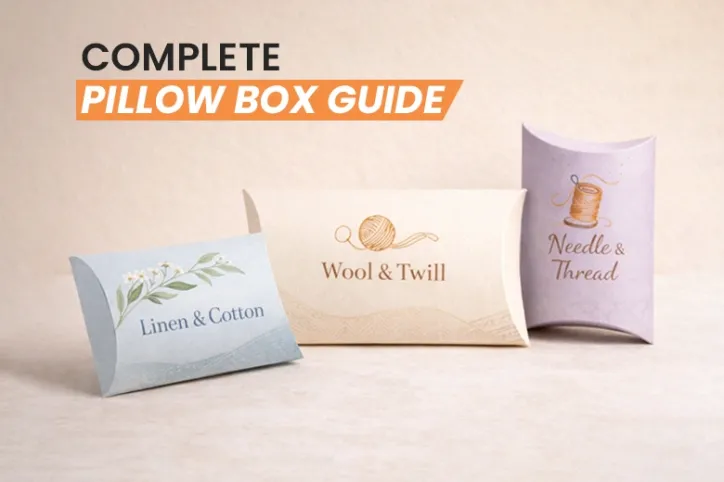

In the retail world, where all you can see are either four- or six-sided boxes that rely on 90-degree corners and adhesives, pillow boxes stand out with their curves.
Their simple pillow-like design makes them visually appealing, while their fold-and-tuck structure keeps the products safely inside. But choosing this unique and pretty packaging demands precision and careful consideration of size, style, material, and design.
This guide dives deep into the details of pillow boxes and provides you with the technical explanations that you need to make an informed decision for your product packaging.
What Is a Pillow Box?
A pillow box is a type of small, lightweight box popular for its curved, pillow-like shape. Unlike traditional rectangular boxes, pillow boxes have inverted round or curved ends that tuck in to close the package, eliminating the need for glue, tape, or other adhesives.
This design allows the box to be stored flat, which reduces inventory space and shipping costs.
The structure is simple yet effective. The central panel acts as the main body of the box, in which the product is placed, and branding is visible on the outside.
The curved sides not only give it its signature look but also create a slight tension when folded, helping to keep the contents secure.
Pillow shape boxes are typically used for small or medium items that don’t require heavy-duty protection, but where presentation and unboxing experience are important.
Why Brands Prefer Pillow Boxes
Brands like cosmetics, jewelry, snacks, or electronics benefit from the pillow box’s compact size and cost efficiency. For businesses that want their products to look premium without investing in expensive packaging, these boxes solve their problem with elegance.
The clean lines and unique shape make pillow box packaging more preferred. When printed with high-quality graphics or finishes, even a simple kraft paper pillow box appears luxurious.
Additionally, their lightweight structure reduces shipping costs, which is especially important for e-commerce brands. The combination of affordability, flexibility, and aesthetics makes it a compelling choice for businesses seeking smart packaging choices.
Where Pillow Box Packaging Works Best
Being versatile does not mean a pillow box is suitable for every product. However, if used with attention, they excel in enhancing presentation and customer experience.
These boxes are ideal for lightweight, small- to medium-sized products, particularly those where visual appeal is a priority. For example,
- Jewelry—rings, bracelets, earrings, necklaces
- Cosmetics and skincare—eyelashes, soaps, lipsticks, and small lotions
- Food and bakery—cookies, chocolates, candies, and small baked treats
- Apparel accessories—scarves, socks, handkerchiefs
- Events and weddings—party favors, wedding giveaways, corporate gifts
- Gift and subscription boxes—curated gift sets
- Retail and boutique products—small home decor items or specialty trinkets
These industries add shaped boxes to their marketing strategies with thoughtfulness and creativity, making them a winning step toward their brand’s recognition.
For instance, candy pillow boxes in a bakery or red pillow boxes at a wedding or birthday can grab instant attention. Similarly, you can also go with the theme.
Examples include Christmas pillow boxes with candy canes and frozen elements or Halloween pillow boxes, which also look visually pleasing in any setting.
However, when shipping delicate products, proper packing methods are essential to prevent damage during transit. Learn more about how to pack fragile items for shipping to ensure your products arrive safely.
Pillow Box Styles

Despite being exclusive, a custom-printed pillow box can attract more customers when styled differently.
- Pillow box with window—Transparent window panels allow customers to view the product without opening the box. These windows can be die-cut in innovative shapes. Popular for retail displays and gift packaging.
- Pillow box with handle—Small handles make the box easier to carry while adding a premium and functional feel. These handles come in twisted kraft paper or satin ribbon, or can be built in as part of the box design.
Understanding Pillow Box Size
One of the most common mistakes brands make is assuming all pillow boxes are the same.
Whether you want large pillow boxes for something heavier or small ones, the sizes will be customized accordingly. Size and style significantly affect both product safety and perception.
| Size Category | Typical Dimensions (inches) | Ideal Product Examples |
| Small | 3″ × 2″ × 1″ | Jewelry, candies, and small cosmetics |
| Medium | 6″ × 4″ × 2″ | Lipsticks, soaps, candles, accessories |
| Large | 10″ × 6″ × 3″ | Lightweight clothing, gift sets, subscription products |
A well-chosen size ensures the product fits snugly, avoiding damage while maintaining a professional look.
A box smaller than the product may cause the item to bulge and destroy the box. While a larger box will be wasteful, the product will move around inside. In both cases, the impression of your brand will be careless and unprofessional.
Styles also matter. Some pillow boxes include windows for visibility and handles for carrying. Each variant serves a functional and aesthetic purpose, and selecting the right combination is critical for customer satisfaction.
Choosing the Right Material
A pillow box can be made from a variety of sustainable, eco-friendly materials. The choice of material also affects strength, durability, and appearance.
- Kraft Paper—Brown kraft is rustic and natural in appearance, or choose white kraft; each option gives a textured surface. Kraft boxes are lightweight, recyclable, and give a rustic, handmade feel. They are ideal for jewelry, small gift items, or boutique cosmetics.
- Cardboard—Smooth and sturdy, making it suitable for printing high-quality graphics. Cardboard provides a polished, professional look and works well for mid-weight items like cosmetics, candles, or subscription boxes.
- Corrugated—Stronger and more protective, used for heavier or slightly fragile products. Corrugated pillow boxes can handle minor impacts during handling or shipping.
When selecting materials, consider product weight, shipping method, and brand image. Combining the right material with appropriate finishes can make even a simple pillow box appear premium.
Customization That Contributes More to Branding
Customization transforms a pillow box from simple packaging into something extraordinary.
With a wide range of printing techniques, matte and gloss finishes, foil stamping, embossing, and debossing, the perceived value of your product can be enhanced.
You can print your artwork both inside and outside of the box. Every side and panel can be customized to your needs.
How Pillow Boxes Are Made
Pillow boxes are created using a precise design, expert skills, and a production process
Designing the Dieline—A dieline is the flat template that defines all folds, panels, and tuck-in ends of the pillow box. Each panel is carefully measured based on the product’s size and weight. Designers use software like Adobe Illustrator or CAD programs to create accurate dielines that ensure proper assembly and fit.
Printing—Once the dieline is finalized, you can proceed with the printing process. These custom-printed pillow boxes can include logos, branding elements, text, and other content based on your artwork. The printing method may vary depending on the material and design. For bulk packaging, we can suggest flexo printing or maybe digital.
Cutting—The printed sheets are cut into the pillow box shape using precision die-cutting machines. This process ensures uniformity and allows the boxes to fold perfectly along creases.
Folding & Assembly—Boxes are folded along scored lines, and ends are tucked in. Inserts, handles, or closure elements are added if needed, such as perforations. The result is a ready-to-use pillow box, either shipped flat or assembled in bulk.
This production workflow and accuracy ensure efficiency while maintaining quality and consistency for every pillow box packaging.
Are Pillow Boxes Cheaper?
Custom pillow boxes are one of the most cost-effective packaging solutions because of lower material usage and a lightweight design.
Compared to rigid boxes, which require more material and heavier shipping, pillow boxes save both production and logistics costs. However, premium printing, embossing, foil finishes, or inserts can increase the price.
| Packaging Type | Material Cost | Assembly Complexity | Shipping Cost | Best Use Case |
| Pillow Box | Low | Easy | Low | Small/lightweight items, gifts |
| Rigid Box | High | Moderate | Medium-High | Luxury or fragile items |
| Corrugated Box | Medium | Easy | Medium | Heavier products, shipping |
| Mailer Box | Medium | Easy | Medium | E-commerce orders |
Careful selection of materials, size, and customization allows brands to maintain affordability without compromising appearance.
Common Mistakes to Avoid
Many brands do not realize how important the selection of pillow boxes can be. Choosing an inappropriate size can either squeeze the product or leave it loose.
It can also ruin the exterior of a box. Another mistake is selecting materials that do not match the product’s weight or desired look.
For instance, if you are selling homemade soap, Kraft pillow boxes are ideal. Overcomplicating design with unnecessary elements can also push customers away and shift their perspective. To avoid these, you can request samples, which can reveal assembly or print issues before mass production.
Final Thoughts
Pillow boxes are versatile, cost-effective, and visually appealing, making them ideal for a variety of products, especially gifts, cosmetics, jewelry, and small retail items. The key to their success lies in selecting the right size, material, style, and customization, while avoiding common mistakes.
When done right, pillow boxes elevate both the product and the brand, combining practicality with an elegant unboxing experience. For businesses seeking affordable packaging that doesn’t compromise on style, pillow boxes remain an excellent solution.
FAQS
1. When should I choose a pillow box instead of a regular box?
Choose a pillow box when your product is lightweight and presentation matters. If you need strong protection for heavy or fragile items, a rigid or corrugated box is usually a better option.
2. How do I know if my product will fit properly in a pillow box?
Measure your product’s length, width, and height, then compare it with the internal dimensions of the box. Aim for a snug fit so the item doesn’t move around or put pressure on the curved sides.
3. Can pillow boxes protect fragile items?
They offer limited protection on their own. For fragile products, you should add inserts, padding, or choose a stronger material like corrugated board.
4. Are pillow boxes practical for e-commerce shipping?
They can be used for shipping small items, but many businesses place the pillow box inside a secondary mailer box for added protection during transit.
5. What should I consider before ordering custom pillow boxes?
Focus on:
- Product size and weight
- Material strength
- Printing and finish quality
- Quantity and budget
Requesting a sample before bulk production can help avoid costly mistakes.
6. Do pillow boxes work well for branding?
Yes, but simplicity works best. A clean design with your logo, colors, and minimal text often looks more professional than overcrowded graphics.
7. Are pillow boxes easy to assemble?
Yes. Most designs use a fold-and-tuck mechanism, so they can be assembled quickly without glue or tools.
8. Can I reuse pillow boxes?
In many cases, yes. If the material is sturdy and not damaged, customers can reuse it for storage or gifting, which also adds to perceived value.
9. What are the limitations of pillow boxes?
They are not ideal for:
- Heavy products
- Large items
- Products requiring a rigid structure
- Understanding these limits helps you avoid packaging issues.
10. How can I make my pillow box packaging look more premium?
You can improve the look by using high-quality materials, adding finishes like matte or soft-touch coating, or including small details like ribbons or inserts.
