


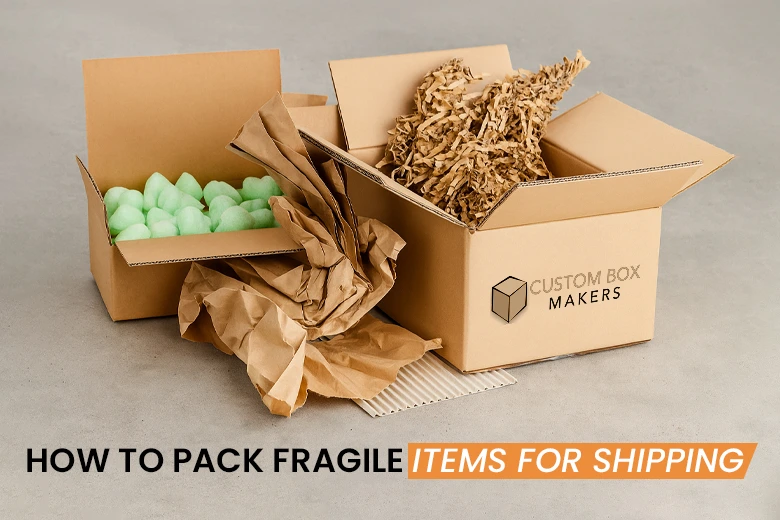

Shipping a fragile item feels risky, and somehow it is, if not done right. Even a well-made product may crack, chip, scratch, or stop working if it moves inside the box or is not protected from sudden hits or forces during transit.
To pack fragile items for shipping, wrap each item separately, place it in a sturdy corrugated box with cushioning on all sides, and fill any empty space so the item cannot move. Double-box very delicate, heavy, valuable, or difficult-to-replace items. Finish by sealing every major seam with strong packaging tape, adding the shipping label, and documenting the packed shipment.
The safest packaging method depends on the product’s weight, shape, material, value, and shipping distance. A small ceramic ornament does not need the same packaging construction as a heavy glass vase, electronic device, or framed artwork.
This guide explains how to pack fragile items step by step, which materials to choose for your product, when to double-box a shipment, and which common packing mistakes to avoid to reduce the risk of damage during delivery.
What Counts as a Fragile Item?
A fragile item is any product that is at risk of cracking, chipping, bending, denting, scratching, leaking, malfunctioning, or losing its presentation during shipment.
Common examples include:
- Glassware and ceramics
- Mirrors and framed artworks
- Electronics and screens
- Candles and glass jars
- Collectibles and antiques
- Musical instruments
- Bottled cosmetics
- Products with handles, stems, or projecting parts.
- Heavy products that can damage themselves during movement
Fragility is not limited to glass. Electronics may be vulnerable to vibration or static electricity, artwork may be punctured or bent, and candles may soften or deform when exposed to heat.
Materials Needed to Pack Fragile Items
Choose packaging materials according to the item rather than simply using whatever filler is available.
| Packing material | Best used for | Important limitation |
| Corrugated shipping box | Outer protection and stacking strength | Must be strong enough for the product’s weight |
| Packing paper | Surface protection and light void filling | Can compress under heavy products |
| Air-cellular or bubble cushioning | Shock and surface protection | Requires sufficient thickness to work effectively |
| Foam sheets | Scratch and vibration protection | May not provide enough void fill by itself |
| Air pillows | Lightweight void filling | Not ideal for sharp or very heavy products |
| Corrugated divider | Separating several products | Must fit securely inside the carton |
| Molded pulp | Fitted, recyclable protection | Requires the correct product dimensions |
| Foam inserts | High-value or repeat shipments | Costs more than basic loose cushioning |
| Reinforced packaging tape | Securing carton seams | Cannot compensate for a weak or damaged box |
Businesses that regularly ship the same product may benefit from custom box inserts instead of manually adding loose filler to every order.
How to Pack Fragile Items for Shipping in 9 Steps
1. Inspect, Measure, and Photograph the Product
Start by inspecting the items for existing cracks, chips, scratches, loose parts, or other damage. Photograph its condition before wrapping it.
Next, record the product’s:
- Length
- Width
- Height
- Weight
- Most vulnerable points
- Replacement value
Measure projecting handles, lids, stems, knobs, and corners rather than measuring only the main body. You can do it right only when you know how to measure product dimensions for ordering or selecting a box.
These measurements help you determine how much internal space is required for wrapping and cushioning. They also help you avoid using an unnecessarily large carton, which increases movement and shipping volume.
2. Choose a Strong, Properly Sized Box
Use a corrugated box in new or nearly new condition. Avoid cartons with crushed corners, tears, punctures, water damage, soft panels, weak previous tape lines, or excessive creasing.
The box should be slightly larger than the wrapped item, leaving enough room for protective materials on all sides without creating excessive empty space. Apply the H-taping method to both the top and bottom of the carton, using shipping-grade tape appropriate for the carton and its packed weight. Increase the protection for heavy, unusually shaped, high-value, or extremely delicate products.
The exact carton construction also depends on what you are shipping. Select the carton grade according to the product’s packed weight, dimensions, fragility, stacking requirements, and shipping environment. Single-wall corrugated boxes may be suitable for lightweight products, while heavy, highly fragile, or high-value shipments often require appropriately rated double-wall or triple-wall cartons.
3. Protect Vulnerable Surfaces and Parts
Before wrapping the entire item, give extra attention to its weakest areas. Corners, edges, glass surfaces, handles, stems, lids, screens, decorative projections, hollow openings, and removable components need additional protection.
Use soft paper, foam sheets, corner protectors, or small pieces of air-cellular cushioning where needed. If there is any component that can be removed, wrap it separately so it cannot move around and strike the main product during transit.
For hollow items such as vases, loosely fill the opening with clean packaging paper. Avoid packaging the cavity too tightly, as outward pressure can damage thin walls.
4. Wrap Every Item Separately
Wrap each fragile product individually. If you are packaging more than one item in the same box, make sure they cannot touch each other or hit the sides of the box. You can use a corrugated divider, fitted compartments, inner boxes, or cushioning to keep them apart.
Cover the whole item and add extra padding around the areas that can break or bend easily. Use a small amount of tape to hold the wrapping in place, but do not stick strong adhesive directly onto a delicate or finished surface.
You do not always need a separate shipping box for every fragile item. Multiple items can go in the same carton as long as each one is wrapped and there is enough protection between them and the box walls. The important thing is to ensure the items do not bump into each other during handling and shipping.
5. Build a Cushioned Base
A protective layer at the end of the shipping box provides a cushion between the carton floor and product. This also leaves a protective layer between the product and the box.
Depending on your product, you can use air-cellular cushioning, dense foam, crumpled kraft paper, molded pulp, corrugated pads, or a fitted insert. Heavy products need denser support because lightweight air pillows or loosely crumpled paper can compress or shift under their weight.
6. Center the Item and Fill Every Void
Place the wrapped product near the center of the box, leaving space between it and the bottom, top, corners, and side walls. Fill the surrounding gaps with cushioning so the product stays in place without putting excessive pressure on it.
When packaging multiple products, keep heavier items towards the bottom, use partitions between fragile pieces, and make sure no product is carrying the weight of another. Lids and removable parts should also be secured so they cannot move freely inside the carton.
Once everything is packed, close the box temporarily and give it a gentle shake. If you can hear or feel the contents moving, reopen the carton and adjust cushioning. This is only a final check for obvious movement, not a replacement for proper packaging or transit testing.
7. Double-Box High Fragile Items
For extremely delicate, heavy, high-value, or difficult-to-replace products, double-boxing provides an additional layer of protection. It can also be useful for long shipping routes, international shipments, or retail products where the inner box needs to arrive in good condition.
Start by wrapping and cushioning the product inside a strong inner carton. Once sealed, place cushioning at the bottom of a larger outer carton and center the inner box inside it. Add protection on all sides so the inner carton does not touch the outer walls or shift during transit. The outer carton should be strong enough to support the total weight of the packed shipment.
8. Seal the Box With the H-Taping Method
Proper sealing helps keep the carton closed, as it moves frequently during handling and shipping. With the H-taping method, tape the center seam where the flaps meet, then secure both edge seams to create an “H” shape. Repeat this on the bottom when needed, especially for heavier shipments.
Use pressure-sensitive plastic packing tape, water-activated reinforced tape, or another shipping-grade tape suitable for the carton and its weight. Avoid relying on masking tape, household adhesive tape, string, gift-wrapping tape, or a single short strip across the center.
Branded packaging tape can also be used when it provides the sealing strength the shipment requires.
9. Label and Document the Shipment
Place the shipping label on the largest flat surface of the carton, keeping it away from seams, corners, tape edges, and closure. If you are reusing a suitable box, remove or cover old labels and barcodes to prevent confusion during handling.
A “Fragile” or “Handle With Care” label can communicate that the contents need attention, but it should never replace proper protective packaging.
For valuable shipments, it is also useful to photograph the item before wrapping, the wrapped product, the cushioning arrangement, the open box before sealing, the sealed carton, and the shipping label. Keep relevant invoices, receipts, valuation records, tracking information, and packaging photographs with your shipment records.
Before choosing additional coverage, check the carrier’s current terms for declared value, insurance, and claims.
How to Pack Different Types of Fragile Products?
You cannot pack all fragile items in the same way. Different types of items have packing methods and precautions depending on their shape, material, weight, and how easily they can break or get damaged. Let us see some common fragile products and the precautions you should take when packing them.
Glassware and Ceramics
Glassware and ceramic pieces can crack or break easily, especially around thin rims, handles, stems, and corners. That is why you need to wrap each piece separately, with extra protection around these weaker areas.
When shipping multiple pieces, use dividers or separate compartments so they cannot touch each other. By following proper packaging instructions, you can ship glass items without breaking them.
Electronics
Gadgets and electronic devices are prone to damage from impacts, moisture, static, or loose packing material entering openings. Protect screens, corners, ports, projecting parts, and removable accessories, and use antistatic materials when appropriate for sensitive components.
Keep the product dry and secure it so it cannot move around inside the box. If available, custom electronic boxes or the manufacturer’s original fitted packaging is a good option to use inside a suitable outer shipping carton.
Artwork, Mirrors, and Frames
Artwork, mirrors, and framed pieces can be damaged by pressure, bending, or impact, while their glass or acrylic surfaces can also scratch or crack. Protect the corners and front surface, and add rigid boards when you anticipate the risk of damage from bending or punctures.
Keep glass or acrylic away from loose hardware and accessories. Large framed pieces need a fitted carton, corner blocks, and double-boxing.
Candles and Glass Jar
Glass candle jars can easily crack from bumps and movement inside the box. Lids and decorative finishes can also be damaged during handling. Wrap each jar separately and give extra protection to glass walls, lids, and decorative surfaces.
If more than one jar is getting packed together, use inserts or partitions to keep them apart. Some brands prefer using custom candle boxes designed with fitted inserts and compartments to keep each jar securely in place during handling and transit.
Temperature is another concern, particularly for candles shipped during hot weather or over long distances. These conditions also make candle shipping different from shipping ordinary glass jars, so the packing method should account for both the glass container and the wax inside.
Collectibles and Antiques
Collectibles and antiques have time-worn, painted, or delicate surfaces that can be easily damaged by tape, pressure, or rough handling. Document the item carefully before packing and avoid applying tape directly to painted, aged, paper, wood, leather, or other delicate finished surfaces.
According to the item, acid-free tissues, soft foam, custom supports, or double-boxing are appropriate. For irreplaceable pieces, professional packing is worth considering.
Common Fragile-Packing Mistakes
If you are facing a fragile packing issue, check this list to see which mistake you are making.
- Using a box that is too large
- Leaving empty space
- Letting products touch the box directly
- Reusing a wax box
- Relying on a fragile sticker
- Skipping the top cushion
- Sealing only the center seam
- Failing to test the packaging
- Failing to keep evidence
How Businesses Can Improve Fragile-Item Packaging
Businesses should look at the total cost of packaging rather than focusing only on the price of the box or filler. A well-planned packaging system can help reduce product movement, packaging time, material waste, oversized cartons, dimensional shipping charges, customer complaints, replacements, returns, and inconsistencies between employees.
For recurring shipments, right-sized corrugated cartons can make packaging more consistent and reduce unnecessary space. Depending on the product, you can also use corrugated dividers, molded pulp trays, die-cut cardboard inserts, or EVA foam inserts to keep items secure.
Standard packaging instructions, approved packaging photographs, and product-specific quality checks can further help employees follow the same process for every shipment. If you ship fragile products regularly, consider custom shipping boxes based on your product dimensions, weight, order quantity, shipping route, and required level of protection. To help determine what type of box or insert may work best, share details such as:
- Product type, size, and weight
- Number of items per box and monthly shipping quantity
- Domestic or international shipping needs
- Current packaging method and any damage concerns
- Product photos
- Preferred box or insert style
Final Words
Packing fragile items safely needs the right box, protecting the weak points, and making sure nothing can move around inside the carton. The right approach is different according to the product, its size, weight, material, and how easily it can be damaged.
However, a little extra care during packing can help prevent damage, returns, and the frustration of receiving a broken product.
FAQS
What is the safest way to pack fragile items for shipping?
Wrap each item separately, protect vulnerable areas, place it in a strong corrugated box, add cushioning on all sides, and remove empty space to prevent movement during transit.
How much cushioning should fragile items have?
Most fragile shipments need enough cushioning to separate the product from the box walls. A common starting point is around 2–3 inches of suitable cushioning, depending on the product weight and fragility.
Should fragile items be double-boxed?
Double-boxing is recommended for valuable, heavy, highly fragile, or difficult-to-replace items. It adds an extra protective layer that helps reduce damage from impacts and rough handling during shipping.
Is bubble wrap enough for fragile shipping?
Bubble wrap provides impact protection but should be combined with a strong carton and proper void filling. Heavy or delicate products may require foam inserts, molded pulp, or custom packaging for better protection.
What type of box is best for fragile items?
A strong, properly sized corrugated box is ideal for fragile products. The box should match the product’s weight, size, and shipping conditions to minimize movement and improve protection.
Does a “Fragile” sticker prevent shipping damage?
A fragile label can alert handlers, but it does not replace proper packaging. The main protection comes from the right box, cushioning materials, secure sealing, and preventing product movement.