

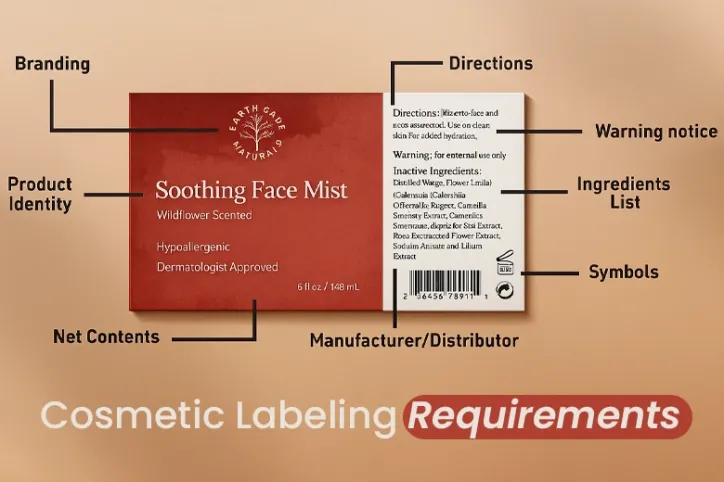

Are you a cosmetic product manufacturer? You must know how important cosmetic labeling is in the United States. Cosmetic products are regulated by the U.S. Food & Drug Administration. Every cosmetic manufacturer needs to comply with three key regulations: the Food, Drug & Cosmetic Act of 1938 (FD&C), the Fair Packaging & Labeling Act, and the Modernization of Cosmetics Regulation Act (MoCRA).
In this blog post, we will discover all of the labeling regulations one by one to make it easier for you to start your cosmetic business in the United States.
Legal Definition of “Cosmetics”
According to the FD&C Act, cosmetics are defined as articles intended to be applied to the human body for cleansing, promoting attractiveness, beautifying, or altering the appearance without affecting the body’s structure and functions.
This definition includes cosmetic products, such as lotions, perfumes, nail polishes, eye makeup, shampoos, hair colors, deodorants, skin creams, and other materials intended to be components of a cosmetic product.
Soaps are generally considered cosmetic products, but if they consist only of an alkali salt of fatty acids and make no claims beyond cleansing the human body, they are not classified as cosmetics under the law.
Cosmetic Drugs To Prevent Disease
Some cosmetic products are also used as drugs to prevent disease or affect the structure or function of the human body. Such products must comply with both drug and cosmetic regulations.
Some of the most popular examples of such products are as follows:
- Anticaries toothpaste
- Suntaining preparations to prevent sunburn
- Anti-dandruff shampoos
Drug regulations are a lot stricter than those for cosmetics. Under the FD&C Act, drug manufacturers are required to register with the FDA annually and update their list of manufactured drugs twice a year. On top of that, all drugs must adhere to current good manufacturing practices outlined in 21 CFR 210 and 211.
What is Cosmetic Labeling?
Cosmetic labeling is all about providing customers with the right information about what’s inside the product they’re using. It covers aspects such as ingredients, directions, warnings, and even the identity of the product itself.
Clear and accurate labeling is not only required by law but also helps build trust with your buyers. When paired with well-designed, custom cosmetic boxes, proper labeling makes your products stand out on the shelf while maintaining your brand’s compliance and professionalism.
Understanding Cosmetic Labeling According to the FD&C and FP&L ACT
Cosmetic labels in the United States are regulated under the FD&C Act and the FP&L Act. These laws make sure products are labeled in a way that gives customers honest and useful details. From product names to quantity information, these acts keep packaging clear and consistent across the market.
Here are some of the key factors of labeling cosmetic items:
Inside vs. Outside Container Rules
Both the inside and outside packaging are important. The FD&C Act applies to every container, ensuring information is available on all levels of the product. The FP&L Act focuses on the outer container. This is where details like the net weight, volume, or ingredient list must appear, so the buyer knows exactly what they are purchasing.
Principal Display Panel (PDP)
The principal display panel is the part of the label most visible to customers when the product is placed on store shelves. It needs to clearly state the product’s name, what it is used for, and how much is inside. Placement, type size, and clarity are also part of this rule to avoid any confusion.
Net Quantity Statements
Cosmetic packaging must provide accurate measurements. For solids, the weight is shown in pounds and ounces. For liquids, it is measured in gallons, quarts, pints, or fluid ounces. In addition to these, metric measurements such as grams or milliliters can also be included. This ensures customers know the exact amount of product they are buying.
Business Information
Every cosmetic product must include the company details on the label. This includes the business name, city, state, and ZIP code. If the company is listed in a directory, the street address may be left out. Distributors who are not the actual manufacturers must use phrases like “Manufactured for” or “Distributed by” to clarify.
Imported Cosmetics
Cosmetic products imported into the United States must display their country of origin in English. This requirement comes from the Tariff Act of 1930. It makes sure customers are aware of where the product was made. Clear origin labeling prevents confusion and enables buyers to make fully informed decisions before making a purchase.
If Labels Are Wrong
When labels include false or misleading information, the product can be considered misbranded. Misbranded cosmetics do not meet the labeling requirements and may face regulatory action from the FDA. This is why accurate and honest labeling is so important for businesses, as it builds trust and keeps products legally compliant in the market.
If your product contains CBD content, you may want to read our detailed guide on CBD Packaging & Labeling Requirements.
Cosmetic Labeling According to MOCRA
The Modernization of Cosmetics Regulation Act (MOCRA) updates cosmetic labeling rules in the U.S. It requires manufacturers to ensure labels are accurate, clear, and not misleading. MOCRA emphasizes safety and transparency, including allergen information and proper ingredient listings. This helps customers make informed choices and ensures products meet FDA safety and compliance standards.
How To Design Cosmetic Labeling?
Designing cosmetic labels is more than just making something look pretty. Your label needs to clearly show what the product is, how much is inside, and who made it. Following FDA, FP&L, and MOCRA rules ensures your label is safe, honest, and professional. Let’s break down the steps from planning to manufacturing.
1. Plan Your Content
Decide what information will appear on the label, including product name, ingredients, net quantity, and business details. Make sure all required regulatory information is included for compliance.
2. Define Your Brand Style
Choose colors, fonts, and graphics that reflect your brand identity. Ensure the style is visually appealing yet keeps text readable and information clear for customers.
3. Include Required Legal Information
Check FD&C, FP&L, and MOCRA rules. Include all necessary statements like allergen warnings, manufacturer info, and accurate net quantity to avoid misbranding issues.
4. Create the Layout
Arrange text and graphics logically on the label. Keep important information visible on the principal display panel and maintain consistency with packaging dimensions.
5. Review and Proofread
Double-check spelling, ingredient accuracy, and regulatory compliance. Make sure the design communicates clearly, avoiding misleading or confusing information for customers.
6. Manufacturing and Printing
Once the design is approved, send it to production. Choose printing methods that ensure vibrant colors, clear text, and durability, whether the labels go on jars, tubes, or custom cosmetic boxes.
Common Mistakes to Avoid in Cosmetic Labeling
Even small labeling mistakes can cause big problems for your cosmetic products. From missing information to misleading claims, errors can confuse customers or lead to regulatory issues. Knowing the most common mistakes helps you create accurate, professional, and compliant labels every time.
1. Missing Required Information
Always include product name, net quantity, ingredients, and business details. Omitting any required info can make your product misbranded under FDA rules.
2. Misleading Claims
Avoid exaggerations or false statements about what the product can do. Labels must be honest and transparent to build trust.
3. Poor Readability
Small fonts, busy graphics, or low-contrast text make labels hard to read. Ensure text is clear and legible on all packaging.
4. Wrong Measurement Units
Use correct weight and volume units: pounds/ounces for solids, gallons/pints/fluid ounces for liquids. Metric units can be added, but cannot replace required U.S. units.
5. Skipping Proofreading
Typos, incorrect ingredients, or misaligned graphics make your label unprofessional and may confuse customers. Always review carefully before printing.
Final Thoughts
Creating accurate and professional cosmetic labels is essential for building customer trust and staying legally compliant in the U.S. Following FD&C, FP&L, and MOCRA rules, using clear designs, and double-checking all details can prevent misbranding issues.
Investing time in well-planned, clear, and compliant labeling not only protects your brand from regulatory problems but also makes your products stand out on shelves, creating a positive impression with customers.
Where to get labels for cosmetics? You can contact an expert label and packaging box manufacturer, Custom Box Makers. We offer a wide range of custom boxes and labels for cosmetics, ensuring they provide solutions that comply with the above regulations.

