


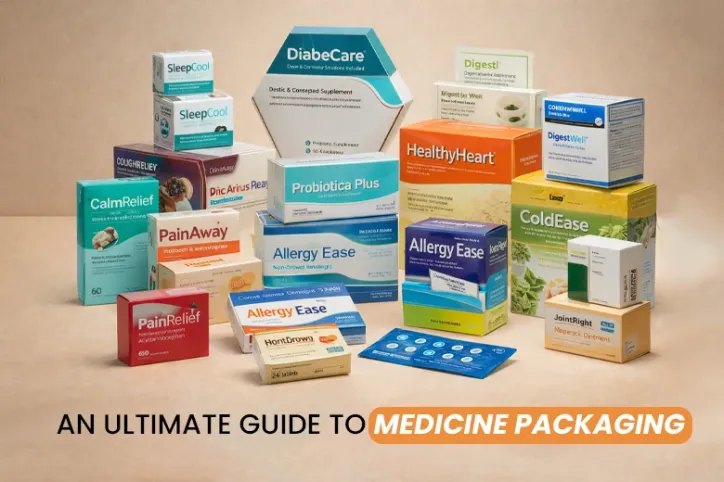

It’s essential to maintain the safety, compliance, and integrity of pharmaceutical products when dealing with medicine packaging. Regulations for healthcare products have become stricter, and the supply chain is more complex. Medicine packaging is an important part of product performance and patient safety.
In this guide, we will cover all aspects of medical packaging so you can choose the right one for your healthcare products.
Let’s dive right in!
What is Medicine Packaging?
Medicine packaging is a specialized, protective container for pharmaceutical products. They are designed to ensure safety, efficacy, and stability throughout the drug’s shelf life. This packaging acts as a barrier against environmental contaminants, including light, moisture, and oxygen, and provides crucial information while preventing tampering.
Regulations & Guidelines for Medicine Packaging Boxes
Compliance serves as the foundation of medical packaging solutions. Regulatory frameworks are designed to provide proper guidelines for manufacturing medicine packaging boxes. The FDA regulations have strict guidelines that must be followed when dealing with pharmaceutical boxes.
Here are some of the key regulations provided by the FDA:
- Appropriate Packaging Materials: You must use packaging materials that are regulated by the FDA, such as FSC-certified materials like cardboard, kraft stock, and corrugated cardboard.
- Durable & Protective Packaging: Your packaging should be durable and meet safety standards. It should protect the stored drugs inside the boxes from any hazard or spoilage.
- Clear Information: Provide clear information in these boxes, such as ingredients, MFG dates, EXP dates, how to use, dosages, and more.
- Tamper-evident Packaging: Your packaging should be tamper-evident. This means it should be visible if the packaging has been tampered with or opened.
- Clear Labeling: FDA labeling requirements state that labels should be visible, using a clear text font style, size, and more. This regulation applies to various products, including cosmetics, medical products, radiation-emitting electronic products, foods, and medical devices.
There are also other compliance requirements that you must follow, such as documented validation and traceability protocols, audit-ready production environments, and ISO 9001:2015 quality management systems.
How To Design a Perfect Medicine Box?
Designing a perfect medicine box involves numerous factors to keep in mind. Designing a medicine packaging box starts with choosing the right box type, materials, and printing options.
Here’s how you can design perfect custom boxes for medicines:
Box Styles & Types
The first step is to select the right type of box style for your medicinal packaging that aligns perfectly with your product and brand requirements. There are numerous box styles that you can select from, but here are the most popular box styles for medicine boxes:
Material Options
Once you’ve selected your box styles, you must choose the appropriate FDA-approved packaging material for your healthcare products. Here are the options available that are used in manufacturing these boxes:
Cardboard:
Cardboard is smooth and sturdy, making it ideal for lightweight healthcare products. It is easy to print on, ensuring clear labeling and effective branding. Additionally, eco-friendly options are available, making it a sustainable choice for modern packaging needs.
Kraft Stock:
Kraft stock offers a natural brown finish that gives packaging a premium and rustic look. It is strong and durable, providing excellent protection during transit. Fully recyclable and FDA-approved, it meets the standards required for healthcare product packaging.
Corrugated Cardboard:
Corrugated cardboard features a multi-layered structure that provides maximum strength and cushioning. This makes it perfect for heavier or fragile items that need extra protection. With customizable thickness and fluting, it can be tailored to meet specific product requirements.
Printing & Finishing Options
When it comes to healthcare packaging, the right printing and artwork are just as important as the material itself. Medical products require clear, precise, and compliant labeling so that customers and healthcare professionals can easily read the dosage, instructions, warnings, and ingredients. Choosing the correct artwork file formats, color profiles, and high-resolution graphics ensures that your packaging prints accurately without blurring or misalignment. This is especially important for FDA-regulated products, where legibility and accuracy are critical for safety and compliance.
Key considerations for medical packaging artwork:
- Use vector files (AI, EPS, PDF) for crisp, scalable graphics.
- Ensure CMYK color profiles to maintain color accuracy during printing.
- Include all required regulatory information clearly, including dosage, warnings, and ingredients.
- Design with clear contrast and legible fonts to improve readability.
- Avoid clutter; simplicity helps convey information effectively and enhances trust.
Finishing options elevate your packaging from functional to premium, improving both appearance and customer experience:
- UV coating protects printed surfaces and adds a subtle shine.
- Matte or gloss finishes give packaging a professional look while increasing durability.
- Embossing or debossing creates a tactile, high-end feel for key brand elements.
- Foil stamping highlights logos or important text for a visually striking presentation.
- Spot UV can be applied selectively to draw attention to logos or images.
Using the right combination of artwork, printing, and finishing ensures your medical product packaging is not only compliant and readable but also visually appealing, durable, and premium, leaving a lasting impression on healthcare professionals and consumers alike. Properly executed packaging builds trust, reinforces brand identity, and ensures your products stand out on shelves while meeting strict medical standards.
Safety Standard Medicine Boxes
Once your medicine packaging boxes are designed, the next step is ensuring they meet safety standards. Healthcare products must comply with FDA regulations and other relevant guidelines to guarantee safe storage, transport, and usage.
Key safety considerations include:
- Barrier protection: Boxes must shield contents from moisture, light, and air to maintain the efficacy of the medicine.
- Durability testing: Ensures the packaging withstands shipping, handling, and storage without damage.
- Chemical and material safety: Only FDA-approved inks, coatings, and materials are used to prevent contamination.
- Child-resistant features: Mechanisms like push-and-turn caps, locking lids, or secure blister packs prevent accidental access by children.
Meeting these standards protects consumers, ensures regulatory compliance, and reinforces trust in your brand’s reliability and professionalism.
Where to Buy Custom Medicine Boxes?
Getting a packaging job done by yourselves can be challenging with so many regulations. This is why it is preferable to leave the job to the experts. Custom Box Makers is a trusted medicine box manufacturer, specializing in custom designs, high-quality materials, and precise printing for healthcare products. From FDA-approved materials to tamper-evident and child-safe features, they provide end-to-end solutions that protect your products and elevate your brand.

