


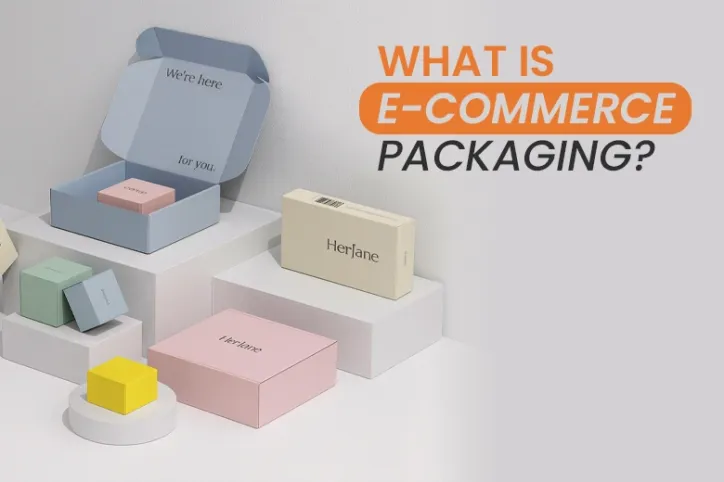

Online shopping has been growing steadily over the years. Offering excellent profits, the e-commerce industry invites many businesses to join the competition. Thus, if you’re running an e-commerce business, you need a brilliant marketing strategy to win the race. This is where e-commerce packaging comes in. What type of packaging is it, and how can it help your business? Read our ultimate guide below completely!
What Is E-Commerce Packaging?
E-commerce packaging is the packaging used by e-commerce brands to pack and ship their products to customers. To ensure safe delivery, e-commerce packaging is made from durable materials such as cardboard, kraft, or corrugated materials.
The main purposes of this packaging are:
- Protecting your products from damage during transit
- Providing a physical touchpoint for brand interaction
Unlike retail packaging displayed in stores, e-commerce packaging is designed to be shock-resistant and withstand the rigors of shipping. Eventually, it should deliver a positive brand experience for customers.
When discussing the e-commerce packaging definition, we must include the box and infill. Yes, this means the materials you use for packaging and delivering your products, such as custom printed boxes, wrapping paper, tape, and labels.
E-Commerce Packaging vs Shipping Boxes: What’s the Difference?
E-commerce packaging is an end-to-end approach to both outer and inner packaging. It protects your product for shipping while also creating a branded “unboxing” experience. In contrast, shipping boxes are a more functional container designed to protect your product during transit.
For better understanding, have a look at the comparison table below.
| Feature | E-Commerce Packaging | Shipping Boxes |
| Purpose | Product protection and brand experience | Safe product transit |
| Functionality |
|
|
| Materials |
|
|
| Design | Customizable for both exterior and interior | Focus on strength rather than aesthetics |
What Are the Benefits of E-Commerce Packaging?
E-commerce packaging offers several key benefits beyond protecting your products during transit.
Let’s break it down!
It Provides Better Product Protection
With its high durability, this packaging is ideal for shipping fragile to heavier products that require extra care.
Helps in Brand Presentation
E-commerce packaging provides a unique opportunity to make a memorable first impression. How? By customizing it, this packaging will enhance brand presentation.
Yes, e-commerce packaging is fully customizable—from beautiful cosmetic boxes to luxury rigid boxes—you can get the ideal packaging for your business.
A Perfect Marketing Tool
This packaging acts as a marketing tool that helps you communicate with customers. For example, you can add promotional materials or your brand’s messages.
Facilitates Sustainability
Increasingly, e-commerce packaging suppliers are designing premium packaging with sustainability in mind. This makes it easier for you to get sustainable packaging materials that reduce environmental impact. By going green, your business can meet the customer demand for sustainable practices.
Delivers Customer Convenience
E-commerce packaging can be designed in easy-open packages that elevate the unboxing experience. Moreover, you can customize it with handles, custom inserts, ribbon pulls, dividers, or die-cut windows. Overall, you can make your packaging more convenient for your customers.
How Many Types of E-commerce Packaging Are There?
When you have excellent packaging, your product will surely look exclusive. Then, those customers will visit your official e-commerce website to purchase more products. Yet, to achieve all this, you should choose the right packaging type.
Here are the various types of e-commerce packaging you can choose from!
Cardboard Boxes

Currently, cardboard is the most popular e-commerce packaging material, preferred by many businesses. This material provides flexibility, durability, and recyclability. Far better, you can customize cardboard boxes in any shape, size, and color. Plus, you can print them with your brand logo and design.
Mailer Boxes
The strength and lightweight features of mailer boxes make them preferable for shipping. These boxes are perfect for shipping products that require minimal protection. With their high flexibility, you can also customize the boxes with your ideas and print your logo professionally.
Poly Mailers
Poly mailers are an affordable yet impactful way to deliver products safely while reinforcing their identity. Made from low- or high-density polyethylene, these mailers are customizable, tear-resistant, lightweight, self-sealing, and weather-resistant.
Padded Envelopes
Padded envelopes are perfect for shipping small products. These envelopes protect from scratches and minor impacts. The best part is that they take up less space and minimize shipping costs.
Bubble Wrap and Air Pillows
Both bubble wrap and air pillows are ideal for cushioning your fragile products. With these materials, your products will be safe, even in a harsh shipping journey.
Biodegradable Packing Peanuts
Biodegradable packing peanuts are made from organic materials such as cornstarch. If you’re looking for an eco-friendly alternative to traditional foam peanuts, packing peanuts are a great option.
Labels
Adding labels to your packaging is essential not only for product identification but also for product differentiation. Better yet, you can customize the labels with your brand logo and theme, too. This way, you can use labels to help your branding performance.
How to Design E-Commerce Packaging?
Alright, now it’s time to design your unique e-commerce packaging!
First, when designing ideal packaging for your business, there are some factors you must consider.
What are they?
- Estimate and decide your budget
- Add value to packaging by promoting and protecting your product inside
- Research how your competitors are packing their products
To make it easier, below are some ideas to help you design your e-commerce packaging!
Make Your Packaging as Simple as Possible
E-commerce packaging should be user-friendly. This means it should be easy for customers to open the packaging, access your product, and dispose of it. So, make sure you don’t use excessive material when designing it. Instead, you should make your packaging as simple as possible.
Focus on Branding
When shipping products to customers, your packaging can act as your brand ambassador. To take advantage of this, you should focus on printing your unique brand logo, images, or graphics. For a more memorable unboxing experience, you can add a thank-you note or personalized message.
Make It Durable
We know that the shipping journey can be challenging, especially for fragile products. This is why you should never ignore durability. So, remember to choose high-quality packaging materials when designing your e-commerce packaging!
Get the Accurate Size
The accurately-sized packaging not only provides better product protection. Better yet, when your packaging is accurate in size, you can minimize shipping costs.
To get accurately measured packaging, first estimate your product’s dimensions. Getting confused? Check out our blog post “How to measure product dimensions” for assistance.
Make It Informative
Don’t forget to provide the essential product details on your packaging. You can use labels to include handling instructions and your contact details. Through these details, you can make your e-commerce packaging informative and reliable.
Choose the Right Printing Techniques
Printing can significantly affect the overall look of your packaging. Speaking of e-commerce packaging, you can choose from the two printing techniques below.
- Digital printing
This printing technique is perfect for low-quantity orders. Besides, digital printing is inexpensive because it doesn’t require printing plates or dies.
- Offset printing
This technique is ideal for printing the interior of your packaging or its inserts. Offset printing provides optimal color output and excellent printing quality. This technique is best suited for printing bulk quantity packaging.
E-Commerce Packaging Says a Lot About Your Product
With more e-commerce brands competing, customers can get any product with a single click. Plus, customers are spoiled for choice, even for similar products. The one that makes a huge difference is how your brand packs and delivers your product to customers. Yes, your packaging says a lot about the product inside—good or bad. Well, what does your packaging say to a customer when they receive your product?
Here’s one thing you must note: e-commerce packaging is about the entire package. A well-packed product shows customers that you put effort into shipping their orders carefully. Plus, the extra personalization touches you add to the packaging can help elevate customer experience.
Final Thoughts
Nevertheless, e-commerce packaging is all about protecting your product. This packaging effectively establishes your brand identity and helps control shipping costs. Plus, the personalization touches you add help in elevating customer experience.
Although designing your packaging may seem complicated, you don’t need to worry when you work with our experts. Remember, your packaging says a lot about your product inside. So, make sure your e-commerce packaging presents your product as of excellent quality!
FAQs
What is e-commerce packaging?
E-commerce packaging is the packaging used by e-commerce brands to pack and ship their products to customers.
What are the benefits of e-commerce packaging?
E-commerce packaging offers several key benefits, including better product protection, improved brand presentation, a powerful marketing tool, support for sustainability, and enhanced customer convenience.
What’s the difference between e-commerce packaging and a shipping box?
E-commerce packaging is an end-to-end approach to both outer and inner packaging. Meanwhile, a shipping box is a more functional container designed to protect your product during transit.
How many types of e-commerce packaging are there?
Various types of e-commerce packaging include cardboard boxes, mailer boxes, poly mailers, padded envelopes, bubble wrap & air pillows, biodegradable packing peanuts, and labels.
