


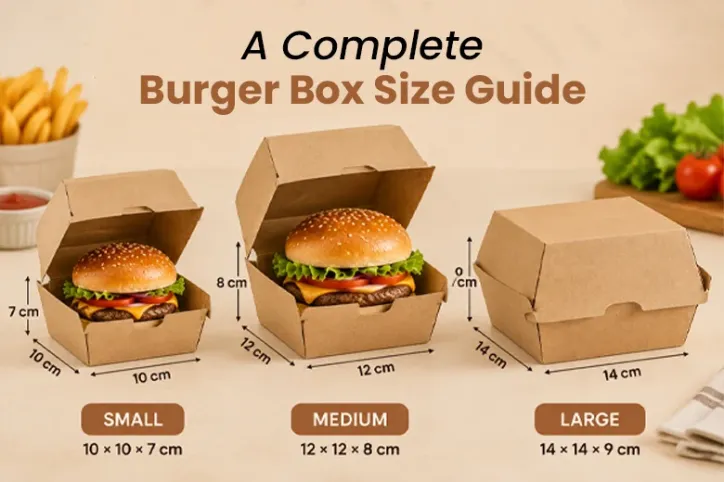

When it comes to burgers, the right size of burger boxes matters a lot. Choosing the right burger box size helps protect your burger and preserve its quality while presenting it in an appealing way.
Many restaurants don’t have a burger problem, but they do have a burger packaging fit problem. A burger can taste great, but it can be ruined when it arrives looking messy, compressed, and cheap because of the wrong-sized box.
Brands trying to compete and build a name need to invest in burger box packaging that showcases their burgers in an appealing way.
In this detailed guide, I cover why burger box size matters, how to choose one, and standard burger box sizes across the fast-food industry.
Why Does Burger Box Size Matter?
In the fast-food industry, food presentation matters a lot. According to research conducted by Precedence Research, food service packaging reached around USD 144.82 billion in 2025 and is estimated to exceed USD 151.98 billion by the end of 2026.
Burgers are the core of the fast food industry and are loved by all ages, which is why brands need the right-sized burger box.
Here’s why burger box size matters a lot:
- Keeps Burgers Fresh: The right-sized box helps retain heat and keeps burgers fresh until they reach the customer.
- Prevents Product Damage: Proper sizing reduces unnecessary movement, helping burgers maintain their shape during delivery and takeaway.
- Improves Food Presentation: A well-fitted burger box packaging keeps the burger neat and presentable when customers open the packaging.
- Reduces Packaging Waste: Choosing the right size prevents oversized boxes and unnecessary packaging materials.
- Enhances Customer Experience: Convenient and properly sized packaging makes burgers easier to carry, handle, and enjoy.
- Supports Brand Presentation: The right box size provides enough space for your logo, colors, artwork, and other branding elements.
Standard Burger Box Size
Standard burger box sizes are designed to fit commonly served burgers while keeping them secure and presentable. Unlike general standard box sizes used across retail and shipping, burger box dimensions depend heavily on the burger’s diameter, finished height, and number of fillings.
Here are standard burger box sizes across the industry:
| Burger Type | Approx. Burger Height | Recommended Box Depth (Height) | Recommended Box Style |
| Slider / Mini Burger | 1.5–2 in (4–5 cm) | 2–2.5 in (5–6 cm) | Small Square Clamshell |
| Standard Single Patty | 3–3.5 in (7–9 cm) | 3.5–4 in (9–10 cm) | Standard Clamshell |
| Gourmet / Large Single | 4–4.5 in (10–11 cm) | 4.5–5 in (11–13 cm) | High-Wall Clamshell |
| Double Patty / Stack | 5–6 in (13–15 cm) | 6–6.5 in (15–17 cm) | Extra-Deep Clamshell |
| Burger with Integrated Fries | Varies | Varies | Clamshell with Fry Vents |
These dimensions are useful starting points, but the final box size should be based on your actual burger measurements. If your burgers fall outside these common ranges, use our box size calculator to estimate a more suitable packaging size.
How to Choose the Right Size for Burger Boxes?

By now, you should understand why the right burger box size matters. To choose the right burger box size, you must consider these factors:
Burger Box Dimensions
First, consider the actual size of your burger. Measure its length, width, and height carefully, including the bun, patties, cheese, vegetables, sauces, and other fillings. Your burger box should provide enough internal space to hold the burger comfortably without squeezing it or leaving too much empty space.
Also allow a small amount of clearance around the burger so it’s easy to place and remove without disturbing its presentation. For taller burgers, make sure the box depth provides enough room between the top bun and the lid.
If you are unsure how to measure packaging correctly, read our detailed guide to learn how to measure box dimensions accurately.
Space on the Lid for the Bun
Make sure there is enough space between the top bun and the lid. A box that is too shallow can press against the bun and ruin its appearance. Extra lid clearance helps keep the burger properly shaped and presentable.
Material Choice
The packaging material also affects the size and structure of the burger box. Cardboard, kraft, and corrugated materials vary in thickness and strength. When you choose the right packaging material, consider both the support it provides and how its thickness affects the usable internal space.
Burger Type and Number of Layers
Single-patty, double-patty, and gourmet burgers require different box depths. Burgers with extra cheese, sauces, vegetables, or multiple patties generally need taller packaging. Consider the full burger structure before deciding on the box height and dimensions.
Room for Toppings and Fillings
Burgers with generous toppings need additional internal space. Lettuce, tomatoes, onions, sauces, and cheese should not get compressed inside the packaging. Choosing slightly more space helps protect the presentation while preventing toppings from spilling out of the burger.
Dine-In, Takeaway, or Delivery
Consider how the burger will reach the customer. Delivery boxes may require a more secure fit to prevent movement during transportation, while takeaway packaging should be easy to carry. Intended use can influence both dimensions and structure.
Packaging requirements can also change across dine-in, takeaway, food trucks, and delivery operations. Our fast food packaging guide explains the materials, structures, and packaging formats commonly used across different food-service applications.
Ventilation Requirements
Freshly prepared burgers release heat and moisture inside the packaging. Properly sized boxes should provide enough airflow or ventilation to reduce condensation. This helps prevent buns from becoming soggy while maintaining the burger’s temperature and overall quality.
Space for Wrapping or Liners
If you use different types food wrapping paper, such as greaseproof paper, burger wraps, or food-safe liners, allow extra space for it. A box that fits the burger perfectly without liners may become too tight once you add the full packaging setup.
Ease of Opening and Closing
The box should close properly without pressing against the burger. At the same time, it should be easy for customers and staff to open. Proper sizing ensures the locking tabs or lid work smoothly without damaging the food inside.
Branding and Printing Area
Consider how much surface area you need for your logo, artwork, product information, or promotional messages. Larger lids and side panels provide more room for branding. However, the box should still remain proportionate to the burger and avoid unnecessary material use.
Final Takeaways
Choosing the right burger box size matters for protecting food quality, maintaining presentation, and improving the customer experience. The ideal size should match the burger’s dimensions, number of layers, toppings, packaging material, and delivery requirements.
Always allow enough room for the bun, fillings, liners, and ventilation without making the box unnecessarily large. A properly sized burger box helps keep burgers fresh, prevents damage, reduces packaging waste, and gives brands enough space for effective branding and printing.
Frequently Asked Questions
How can the right supplier help optimize burger box sizes over time?
Custom Box Makers can help refine burger box dimensions based on product changes, delivery needs, materials, and customer feedback, ensuring a better fit over time.
What is a standard burger box?
A standard burger box is packaging designed to hold commonly sized burgers securely. Its dimensions vary depending on burger height, diameter, toppings, and whether it contains single or multiple patties.
How do I choose the right burger box size?
Measure your burger’s length, width, and height, including toppings and fillings. Allow enough clearance around the burger and above the bun to prevent compression while keeping movement inside the box minimal.
Should a burger box be bigger than the burger?
Yes, a burger box should be slightly larger than the burger. A small amount of extra space prevents compression, accommodates toppings and liners, and makes placing and removing the burger easier.
What material is best for burger boxes?
Cardboard and kraft paperboard are commonly used for burger boxes because they provide strength, printing flexibility, and convenient handling. The ideal material depends on burger weight, grease level, and delivery requirements.
