

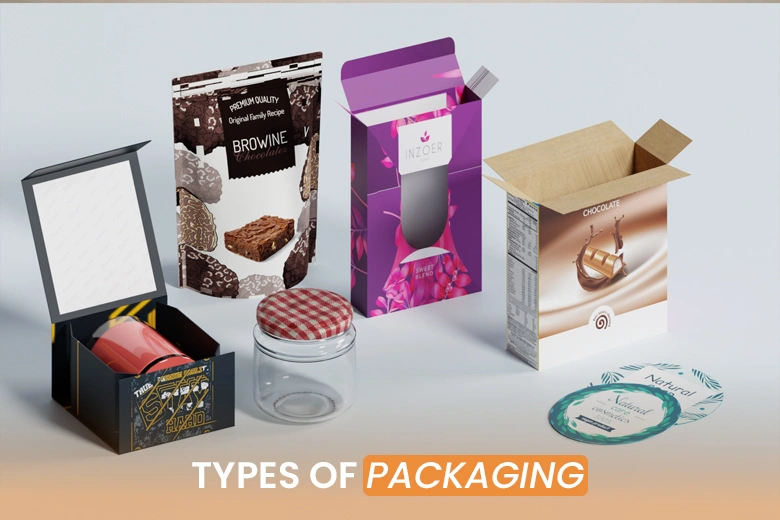

Overview: Packaging falls into three main types: primary, secondary, and tertiary. Each packaging type comes with it’s own characteristics and helps protect products and attract customers.
Packaging is important in every industry. It helps break down and make the product. Choosing the right type of packaging depends on your product requirements and characteristics.
Many industries use different types of packaging to package, store, and ship their products. Moreover, packaging can be classified into three types: primary, secondary, and tertiary.
Each type plays a crucial role in keeping your products safe.
In this blog post, I will walk you through the three main types of packaging and how they’re used across various industries.
Let’s dig in.
What is Packaging?
Packaging is a specialized container that is designed to store, hold, and safely ship products. Packaging makes your product more appealing with custom artwork and builds brand recognition by featuring your logo and other brand elements.
To learn more about packaging, read our detailed packaging guide.
Types of Packaging
Packaging is mainly classified into three main types. Each type comes with it’s own characteristics and helps in enhancing the visual appeal and safety of the product.
Here are the three main types of packaging
- Primary Packaging (First Layer of Packaging)
- Secondary Packaging (Second Layer of Packaging)
- Tertiary Packaging (Third Layer of Packaging)
These three levels of packaging work together throughout the product journey. Primary packaging protects the individual product, secondary packaging groups or presents products, while tertiary packaging helps move larger quantities safely through storage and distribution.
What is Primary Packaging?
Primary packaging directly contains and protects the product. It serves as the first layer between the product and the consumer and often remains in use throughout the product’s lifespan.
“Primary Packaging is known as the first layer of the packaging that comes in direct contact with the product itself.”
This type of packaging helps preserve product quality and protects it from damage from moisture, dust, and more.
Primary packaging is also where you can easily find labels, important information, ingredients, and warnings for consumers.
Popular Examples of Primary Packaging
Various packaging components can be considered primary packaging. For example, a cosmetic lotion can be placed in a plastic bottle with a label and a lid. All three components are considered primary packaging because they are in direct contact with the product.
Technology products can also use primary packaging. For example, an iPhone may be placed directly inside a two-piece retail box with a fitted insert that holds the device securely. Since this packaging immediately contains and protects the product, it can function as primary packaging.
These packaging materials and components help create the final barrier between the product and the consumer.
Some other popular examples of primary packaging are as follows:
- Mylar Bags
- Glass Bottles
- Deli Paper
- Metal Cans
- Butter Paper
- Aluminium Foil
- Wrappers
- Blister Packs
- Skin Packs
Importance of Primary Packaging
Primary packaging plays an important role in protecting products and maintaining their quality. Some of its key benefits include:
- Protects against physical damage, contamination, and spoilage
- Displays essential product information, such as ingredients, instructions, and branding.
- Bottles and jars for liquids, creams, or sauces
- Sachets and blister packs for medicines
- Plastic films or wrappers for food items like snacks, chocolate, or baked goods
Primary packaging can also help improve product usability by making products easier to open, dispense, reseal, store, or consume. Its design often plays an important role in the customer’s first interaction with the actual product.
What is Secondary Packaging?
Secondary packaging is the second layer of packaging that surrounds or groups products already enclosed in primary packaging. Its main purpose is to provide added protection while making products easier to handle, store, organize, and transport.
“Secondary packaging, also known as the second layer of packaging, helps secure and organize individual units of a product.”
The main purpose of secondary packaging is not just to hold the product directly, as primary packaging does, but to safely deliver multiple units to a retail or end user.
Removing secondary packaging does not affect the product itself, unlike removing primary packaging. Secondary packaging helps unify products into cohesive units for storage or shelf display.
Secondary packaging is commonly used in industries such as food, cosmetics, beverages, and over-the-counter medications. It groups individual products, making them easier to label, handle, store, and palletize, while also improving product presentation during retail display and distribution.
Popular Example of Secondary Packaging
Secondary packaging is outer packaging that houses the primary packaging in direct contact with the product. For example, a medicine box with pills in a blister pack, or a syrup bottle in a pharmacy aisle.
Another example is a cosmetic box that contains a bottle of lotion, lipstick, or another skin care product, making it easier to display products on retail shelves.
Here are some of the most popular examples of secondary packaging:
- Display Boxes (For displaying products directly on counter shelves; easy shelf display)
- Folding Cartons (Tuck-ends made from paperboard for skin care products or lightweight goods)
- Cereal Box (A seal-end box for containing cereal pouches in a box for better shelf display)
- Gift packaging
- Bubble Mailers
Importance of Secondary Packaging
Secondary packaging matters in retail because it helps organize individual products on shelves. Here are some of the key benefits of secondary packaging:
- Cardboard cartons that hold multiple bottles, jars, or boxes offer extra protection during storage and transport.
- Shrink-wrapped multipacks simplify bulk handling
- Retail packaging sleeves for product bundles or luxury presentations enhance shelf appeal and communicate branding.
Secondary packaging also helps retailers manage inventory more efficiently because they can handle multiple individual products as a single unit. It can also provide additional space for branding, promotional information, barcodes, product instructions, and other important details.
What is Tertiary Packaging?
Tertiary packaging is one of the most commonly used packaging methods for shipping products from one destination to another.
“Tertiary packaging is the third layer of packaging that helps in shipping products through shipping containers, transit packaging, or boxes to retailers or consumers.”
This type of packaging is manufactured using durable packaging materials and designed to ship multiple products at once. Tertiary packaging is usually removed before the product reaches the customer, except when the product is shipped directly to them.
Popular Examples of Tertiary Packaging
Any packaging used to ship multiple products is considered tertiary packaging.
For example, a brand using subscription boxes to send products directly to customers.
Some of the most common tertiary packaging examples are as below:
- Mailer Boxes
- Corrugated Boxes
- Magnetic Boxes
- Shipping Boxes & Containers
- PR Boxes
- Wood Pallets
- Rigid Boxes
Importance of Tertiary Packaging
Tertiary packaging plays an important role in supply chain management and bulk transportation. Some of its major benefits include:
- Protects large quantities of products during shipping and warehouse storage
- Makes products easier to stack, load, unload, and transport
- Helps reduce product movement and damage during transit
- Improves warehouse organization and inventory handling
- Allows multiple secondary packages to be transported together efficiently
Difference Between Primary, Secondary, and Tertiary Packaging
Each packaging type has unique characteristics that set it apart from the others. I have broken down the differences between each type of packaging for a better understanding:
| Feature | Primary Packaging | Secondary Packaging | Tertiary Packaging |
| Packaging Layer | First layer of packaging | Second layer of packaging | Third layer of packaging |
| Contact With Product | Usually comes in direct contact with the product | Surrounds or groups primary packaging | Groups multiple secondary or primary packages |
| Main Purpose | Protects, preserves, and contains the product | Provides added protection, organization, and presentation | Supports bulk handling, storage, and transportation |
| Used By | Consumers and end users | Retailers, brands, and distributors | Warehouses, logistics providers, retailers, and distributors |
| When It Is Removed | Usually remains with the product until or during use | Usually removed before or when the product is used | Usually removed before retail display or delivery to the end customer |
| Branding Role | Often displays product information, labels, ingredients, and branding | Commonly used for branding, retail presentation, and promotional information | Branding is usually less important than protection and logistics |
| Handling Quantity | Holds a single product or individual unit | Holds one or multiple primary packages | Holds multiple packaged units in bulk |
| Common Examples | Mylar bags, bottles, cans, wrappers, blister packs | Folding cartons, display boxes, cereal boxes, packaging sleeves | Corrugated shipping boxes, pallets, shipping containers, mailer boxes |
| Main Focus | Product protection and usability | Product grouping, presentation, and added protection | Shipping efficiency, warehouse handling, and bulk protection |
| Typical Use | Food, cosmetics, medicines, beverages, and consumer goods | Retail shelves, product bundles, cosmetics, food, and pharmaceuticals | Warehousing, distribution, logistics, and long-distance shipping |
How to Choose the Right Type of Packaging?
The right packaging depends on the product, its protection needs, how it will be displayed, and how far it needs to travel. When choosing packaging, consider factors such as product size, weight, fragility, storage conditions, shipping requirements, customer experience, and retail presentation.
In many cases, a product requires all three levels of packaging. Primary packaging protects the product itself, secondary packaging improves organization and presentation, and tertiary packaging provides the protection and efficiency required for bulk transportation.
If you are still unsure which packaging type to choose for your product, you can ask a reliable, trusted box manufacturer, such as Custom Box Makers. Our team of experts can help you choose the right packaging based on your product’s unique requirements.
Final Thoughts
Primary, secondary, and tertiary packaging each serve a different purpose, but together they protect products throughout their journey.
Primary packaging directly protects the product, secondary packaging improves grouping and presentation, while tertiary packaging supports safe storage and transportation.
Understanding these packaging levels can help businesses choose the right solution for product protection, retail presentation, inventory management, and shipping.
Frequently Asked Questions
What are the three main types of packaging?
The three main types of packaging are primary, secondary, and tertiary packaging. Primary packaging holds the product directly, secondary packaging groups primary packaging together, and tertiary packaging supports bulk handling and transportation.
What are the different types of packaging materials?
Common packaging materials include paper and cardboard, plastic, glass, metal, and biodegradable materials.
How is packaging classified?
Packaging is classified in several ways, including by function, material, structure, industry use, and sustainability. This straightforward classification helps businesses choose packaging that fits product, logistics, and environmental goals.
Why is packaging important?
Packaging protects products during handling and transport, supports efficient storage, reduces damage risk, and helps businesses to promote their brand. Proper packaging ensures products reach customers safely and in good condition.
What are the 5 P’s of packaging?
The 5 Ps of packaging are Promote, Position, Present, Provide, and Protect. When you check off all 5, you will design impactful packaging that wins in the market.
What are the 4 C’s of packaging?
The 4 Cs of packaging design are: Clarity, Creativity, Consistency, and a consumer-centric approach. These principles help you achieve the perfect packaging by considering what your target market wants.