


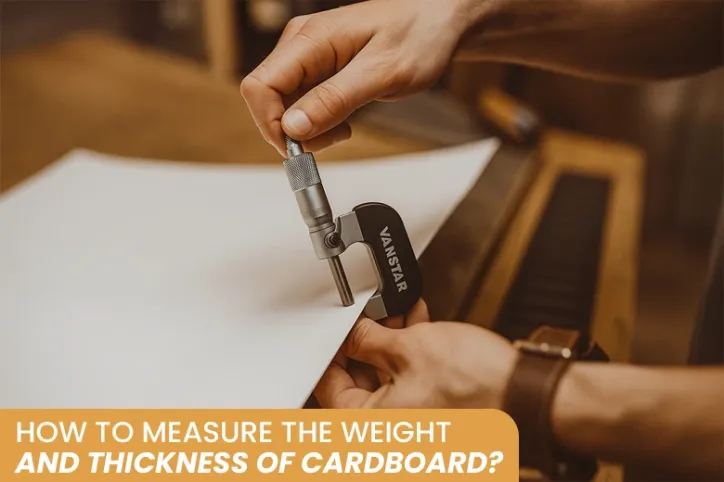

The range of packaging solutions is increasingly changing. However, when it comes to all-purpose packaging material, the only material that comes to mind is “cardboard”.
Cardboard is an excellent packaging material for various business needs, but it is essential to understand its properties and characteristics, which begin with its weight and thickness.
This thickness guide for cardboard material will walk you through everything you need to know about this material and help you determine the right specification for your packaging needs. However, let’s start by learning what cardboard is.
What is Cardboard?
Cardboard is a versatile product packaging material that can be customized in any shape, size, and style to meet your specific box requirements. But what is cardboard and what makes it a versatile packaging material? Is it the durability? Flexibility? Or both? Well, to be honest, it’s both. These packaging materials are widely used in almost every industry. Whether it’s retail, e-commerce, electronics, cosmetics, or another industry, you can find cardboard packaging used everywhere.
The durability of your cardboard boxes depends on the thickness level you choose for the material to use in the packaging production process.
Let’s learn why thickness matters.
Why Does Cardboard Thickness Matter?
There are several reasons why cardboard thickness matters the most in product packaging. Here are some of them mentioned below:
Protect Goods
Choosing the right thickness for your cardboard material helps in protecting the packaged goods. The thickness of cardboard determines the level of protection.
Minimize The Shipping Costs
Theoretically, a thicker box is equal to a heavier box, which contributes to a higher shipping cost. However, at the same time, you can save money by avoiding product damage during deliveries, which means you will have to deal with fewer damaged products that need to be replaced.
Promote Your Brand With Quality Printing
You can’t entertain customers with plain brown boxes; instead, you would need a box that makes your brand stand out. Cardboard boxes are ideal for this purpose, as they can be printed with high-quality colors that capture the attention of your customers.
Cardboard Weight & Thickness
To understand better, you have to keep these units in mind, such as PT (Points) and GSM (Grams Per Square Meter). You can also check out our guide to learn more about the difference between PT & GSM units.
Here’s what you need to know:
Grams Per Square Meter (GSM)
GSM is a unit used to measure the weight, length, and breadth of cardboard stock used in the manufacturing process. GSM is known to be the most popular method to determine the weight of cardboard.
But can we know the thickness of cardboard in PT if we have GSM? The answer is yes, approximately. We know that there is no such way to find the accurate PT from the GSM, but to know the approximate PT unit, you can use this formula:
PT = GSM/14
For example, if you have 300 GSM, we will have the PT of:
PT = 300/14 = 21.4
Below are the listed GSMs that get used to print the following products:
- 35 to 55 GSM for the newspaper
- 90 to 100 GSM for printer paper
- 120 to 140 GSM for posters
- 210 to 300 GSM for brochures
- 350 to 400 GSM for packaging.
The Point System (PT)
The point system, or PT, is used to measure the thickness of printing material. Each point represents 1/1000 of an inch. The thinnest paper point starts from 8pt and can go up to 24pt or more.
Here’s how you can get the approx GSM from the PT
GSM = PT X 14
In our case, we have 21.4 pt
GSM = 21.4pt X 14 = 300 approx.
To understand the conversion of GSM and PT, you can review our page of the paper weight chart.
Corrugated Box Thickness Types
Another type of cardboard that gets used widely is corrugated cardboard. The thickness of corrugated cardboard depends on the corrugate flute you choose for your packaging. There are several different types of flutes available, such as:
- A-flute: It is 3mm thick or 1/8 inch
- B-flute: It is 4mm thick or 1/8 inch
- C-flute: It is 2mm thick or 11/64 inch
- E-flute: It is 1.5mm thick or 1/16 inch
- F-flute: It is 0.6mm thick or 1/32 inch
Want to know more about corrugated material? You can read our detailed and comprehensive guide on corrugated cardboard.
Conclusion
It is important for you to understand the cardboard thickness and weight if you aim to get high-quality cardboard boxes. The GSM and PT units help to understand whether your product will be safe during handling or not. The GSM and PT unit you select depends on the product you want to store.
If you don’t know which PT of GSM would suit your product packaging needs, you can always take help from packaging experts like Custom Box Makers.
Contact us today, and let us help you manufacture the sturdy packaging your product needs.

