


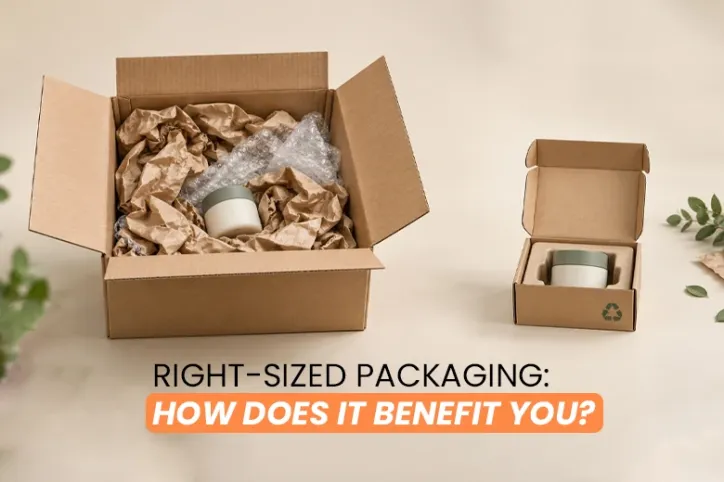

Right-sized packaging benefits both the planet and your business and reduces your carbon footprint and material use. Research shows that 28% of consumers receive packages that are much larger than the items inside. This approach not only harms the product but also contributes to waste. Using the wrong box size creates a negative customer experience that affects your business.
In this guide, I will walk you through why right-sized packaging matters and how it benefits you.
Let’s dive right in.
Why Right-Sized Packaging Matters
Right-sized packaging refers to a custom box that is personalized to match the exact dimensions of the products being shipped. Using this type of packaging helps avoid the use of unnecessary void fillers. It also ensures that each package is perfectly made for its product.
This type of packaging has gained traction among various businesses, including eCommerce, because of its financial and environmental benefits.
Benefits of Using Right-Sized Packaging
There are various benefits of using right-sized packaging for your brand. I have compiled a list of benefits that you can get when approaching right-sized packaging, such as:
Protection in Transit
One of the first benefits of right-sized packaging is providing the right protection for your product during transit. A perfectly sized box lets you pack and ship directly, preventing internal collisions and absorbing shock, vibration, and drops. Not only that, but having a properly sized box helps keep the product’s shape intact and safe.
Customer Experience
Using the right-sized box can help create a better customer unboxing experience. Imagine yourself as a customer receiving a box where the product rattles; how would you feel? Frustrated right? That is why you should provide frustration-free packaging by customizing its size in order to create a lasting impression on customers.
Reduce Packaging Material Costs
The cost of packaging materials, void fillers, and tape can add up quickly when you’re using the wrong size packaging for your product. One of the main benefits of the right box size is reduced packaging material costs and waste.
By choosing the right box size, you can cut waste by up to 70% by using the exact material you need for your custom packaging boxes.
Increase Warehouse Efficiency
Using the right box size can help you make better use of your warehouse space. Oversized boxes take up unnecessary room on shelves, pallets, and storage racks.
With properly sized packaging, you can store more products in the same area and organize inventory more efficiently. It also makes handling, stacking, and moving boxes easier for your warehouse team, which can improve overall workflow and reduce storage-related costs.
Lower Shipping Costs
Shipping charges often depend on the size and weight of your package. Using oversized packaging can increase dimensional weight and lead to higher shipping costs. Choosing the right box size helps reduce unnecessary space and keeps the overall package dimensions smaller.
This can lower dimensional weight charges and help you save money on each shipment, especially when you are handling a large number of eCommerce orders regularly.
Right-Sized vs. Oversized vs. Undersized Packaging
Packaging size directly affects how well a product fits, stays protected, and ships. A package can be properly sized, too large, or too small depending on the amount of space left around the product.
- Right-sized packaging provides enough room for protection while keeping empty space to a minimum.
- Oversized packaging creates excessive empty space, which often requires extra inserts or void fillers to keep the product stable.
- Undersized packaging fits too tightly and may place unwanted pressure on the product during packing and transit.
The table below compares these three packaging options based on fit, protection, material usage, and shipping impact.
| Type | Internal Space | Protection Level | Material Usage | Shipping Impact |
| Right-sized packaging | Balanced space around the product | Helps keep the item stable and protected | Uses material more efficiently | Helps reduce unnecessary package volume |
| Oversized packaging | Excessive empty space | Allows more movement unless fillers are added | Uses more board, filler, and packing material | Can increase dimensional weight and shipping charges |
| Undersized packaging | Very limited space | May squeeze or damage the product | Uses less material but may reduce protection | Smaller size, but a poor fit can increase damage risks |
Right-sized packaging offers the best balance between product protection, material efficiency, and shipping costs. Oversized boxes can increase waste and transportation expenses, while packaging that is too small may not provide enough room to protect the product properly.
How to Choose the Right Packaging Size?
Choosing the right packaging size starts with understanding your product and its packaging requirements. You need to consider its dimensions, weight, fragility, and how it will be handled during storage and shipping. The right size should provide enough protection without leaving unnecessary empty space.
Here’s how you can choose the perfect right-sized packaging for your products.
1. Start with Product Dimensions
Start by measuring the exact dimensions of your product, including its length, width, and height. Make sure you measure the product at its widest and tallest points. You should also consider any additional space needed for protective materials or inserts.
Accurate measurements help you avoid boxes that are too large or too tight. This gives your product a secure fit while reducing unnecessary material use and empty space.
Don’t know how to measure dimensions for your box? No worries, you can read out our detail guide on how to measure your box dimensions.
2. Select the Box Type
The box style you choose also affects the final packaging size. Different products require different structures depending on their weight, shape, and shipping needs. For example, mailer boxes work well for eCommerce products, while folding cartons are suitable for lightweight retail items.
Select a box style that supports your product properly without adding unnecessary space. The right structure can also improve stacking, storage, handling, and the overall unboxing experience.
3. Choose the Packaging Material
Packaging material affects both the protection and overall dimensions of your box. Thicker materials such as corrugated board may require slightly more space compared to lightweight paperboard.
Consider your product’s weight, fragility, and shipping conditions before selecting the material. Heavy or delicate products usually require stronger materials for better protection.
Choosing the right material helps you maintain a practical box size without compromising durability, product safety, or overall packaging performance.
4. Add Inserts When Needed
If your product needs extra support, consider adding custom box inserts inside the packaging. Inserts help hold products firmly in place and reduce movement during handling or shipping. However, they also take up internal space, so you need to include their thickness when calculating box dimensions.
Foam, cardboard, molded pulp, and paperboard inserts can be used depending on the product. Properly fitted inserts improve protection without requiring an unnecessarily oversized box.
5. Test the Packaging
Before placing a large packaging order, test the box with your actual product. Check whether the item fits comfortably, stays secure, and has enough protection during movement. You can also perform drop, stacking, and shipping tests to identify possible issues.
Testing helps you determine whether the packaging is too tight, too loose, or properly sized. Making adjustments at this stage can prevent product damage, excess material use, and unnecessary shipping costs.
Common Mistakes When Choosing Packaging Size
Avoid these common mistakes when deciding the right packaging size for your products:
- Measuring the product incorrectly before selecting the box dimensions.
- Using oversized packaging that leaves unnecessary empty space.
- Choosing packaging that fits too tightly around the product.
- Forgetting to account for inserts, padding, or protective materials.
- Selecting dimensions without considering the thickness of the packaging material.
- Ordering in bulk without testing the packaging first.
- Using one standard box size for products with different shapes and dimensions.
Final Thoughts
Right-sized packaging is a practical way to protect your products, reduce waste, and control packaging costs. By choosing the correct dimensions, material, box style, and inserts, you can create packaging that fits your product properly without unnecessary space.
It can also improve warehouse efficiency, lower shipping expenses, and create a better customer experience. Before placing a bulk order, always test your packaging to make sure it offers the right balance of protection, efficiency, and overall performance.


