

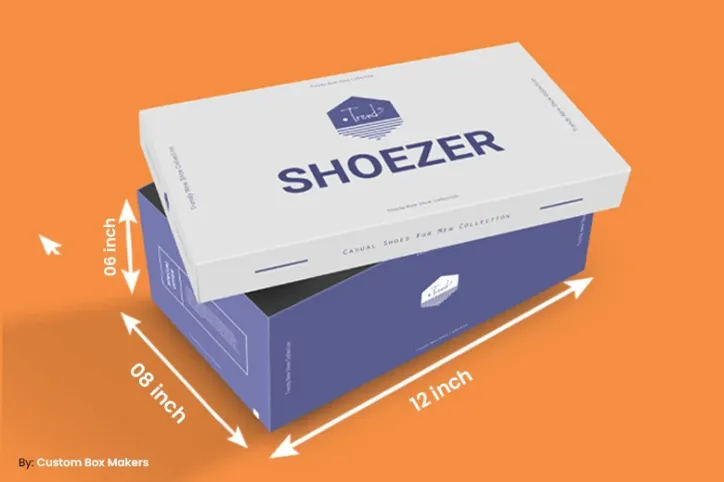

If you’re in the shoe business, you must be aware that the one thing that matters the most is its packaging. One box size does not fit all sizes of shoes. Each shoe size needs its own box. Therefore, you have to put a lot of effort into manufacturing shoe boxes.
Having the right size of shoe box not only protects the shoes but also gives your shoes the perfect fit they need. This way, you can showcase your shoe product exclusively in an appealing way. So, without wasting any more time, let’s get started on learning how to measure a perfect shoebox dimension.
Why do you need shoe boxes and their dimensions?
Custom shoe boxes give your shoes a perfect house when you’re not wearing them and protect them from getting any dirt or dust particles. This way, you can keep your shoes in pristine condition. To have the perfect size of a shoe box, you need to have the exact shoe box measurement. And for that, you have to learn to measure 3 basic dimensions: Length (L) X Width (W) X Height (H).
Average Shoe Box Size
The average shoe box length is between 13 to 14 inches, no matter if it’s for men or women. A men’s shoe box measures 10 inches wide and 5 inches tall, whereas a women’s shoe box measures 7.5 inches wide and 4″ tall.
Below is a table that indicates the regular shoe box sizes of different age groups, including average shoe box sizes for children.
| Age Group | Shoe Size | Length (in) | Width (in) | Height (in) |
| Toddler (2-4 Years) | Toddler (Large) | 8.0 | 5.0 | 4.0 |
| Child (5-9 Years) | Children 3-5 | 9.0 | 6.0 | 4.5 |
| Youth (10-14 Years) | Girls 6-9, Boys 8-10 | 10.0 | 6.5 | 5.0 |
How Much Does a Box of Shoes Weigh?
Shoe Boxes are made of thick corrugated cardboard, which can be recycled 100%. However, the weight of the box depends on the size, number of shoes, and material used. The average shoe box can weigh from 1.5 to 10 pounds.
Learn How to Measure Shoe Box Dimension Step-by-Step

If you are in the shoe business, you may have found yourself asking, “What are the dimensions of a shoe box?” To measure your shoe box dimension, you would need to measure three measurements of a shoe box as mentioned above.
- Length
- Height/Depth
- Width
Step 1. Grab an inch of tape or a ruler
Step 2. To measure the length of a box, measure your recent box from left to right. In the case of the shoe, measure the length of your shoe and add 0.079 inches to it for some extra space. As shown in the image above.
Step 3. To measure the height/depth of a box, measure your box from the bottom to the top of your recent box. In the case of the shoe, measure the width of your shoe and add 0.079 inches to it for some extra space. As shown in the image above.
Step 4. To measure the width of a box, measure your shoe box from left to right. In the case of the shoe, measure the width of your shoe and add 0.079 inches to it for some extra space. As shown in the image above
Standard Shoe Box Sizes For Men & Women
Men’s and women’s shoe sizes can vary greatly, with some men needing a size 13 or higher and some women needing a size smaller than 5. A single box size wouldn’t be suitable for this broad range.
Most shoes come packaged in cardboard boxes designed to protect the footwear during transportation and storage. The dimensions of a standard shoe box vary depending on the shoe size and type. Here’s a breakdown of standard shoe box dimensions for men and women.
| Box Type | Length in Inches | Width in Inches | Height in Inches |
| Men’s Shoe Box | 13-15 (33-35.5 cm) | 7-8 (18-20 cm) | 4-5 (10-13 cm) |
| Women’s Shoe Box | 12-13 (30.5-33 cm) | 7-8 (18-20 cm) | 4-5 (10-13 cm) |
Note: These are average dimensions, and actual sizes may vary slightly depending on the shoe brand and style.
- Men’s shoes typically require larger shoe boxes compared to women’s shoes.
- Women’s shoes generally fit comfortably in smaller, lighter shoe boxes.
- The material of the shoe box is crucial for protecting delicate footwear. It should be sturdy and allow for ventilation.
By understanding these standard shoe box sizes, you can better accommodate your footwear storage and shipping needs.
Dimensions for Different Types of Shoes
Below we have listed some standard shoe box sizes whose dimensions are internal and not external. The external dimensions will increase by 0.25-0.75 inches per side depending on material thickness. For shipping, allow 0.5–1 inch clearance if inserts or wrapping are used.
High Heels
High heels are tall and narrow, and a box should be made with that in mind. They need extra height to protect the heel tip and prevent pressure damage.
- Length: 12–13 inches
- Width: 8–9 inches
- Height: 4.5–5.5 inches
The added height accommodates the overall footwear and allows space for tissue paper or inserts without bending the heel.
Boots
Boot box dimensions vary according to the type. Whether with wide calves, mid calves or even knee-high, they require more space than usual and weigh a bit heavier than regular ones.
- Length: 14–15 inches
- Width: 8–10 inches
- Height: 6–7 inches
Boots occupy more volume and are heavier, so boxes are usually made from thicker rigid or corrugated board to prevent collapse.
Athletic Shoes (Sneakers / Trainers)
Athletic shoes demand shoe boxes that prioritize breathability to combat moisture and odor. Their shoebox should have some ventilation holes to keep the moisture out.
- Length: 12–14 inches
- Width: 8–10 inches
- Height: 4–6 inches
Sneakers have bulkier soles and uppers. Vent holes help reduce moisture buildup from sweat or humidity.
Dress Shoes
An elegant box design complements the shoe’s style. Dress shoes are slimmer and lower in profile, so their boxes are more compact and refined.
- Length: 12.5–13.5 inches
- Width: 8–10 inches
- Height: 4–4.5 inches
Lower height prevents unnecessary movement inside the box, while padding protects polished surfaces from scuffs.
Famous Shoe Brand Examples & Their Box Dimensions
International shoe brands design their boxes to match the shape, weight, and presentation style of their footwear. While dimensions can vary slightly by shoe size and category, most major brands follow standard, industry-recognized box size ranges.
Shoe Box Size Chart
| Shoe Brand | Their Famous Shoe Type | Internal Box Dimensions in Inches (L×W×H) |
| Nike | Athletic/Sneakers | 13 × 9 × 5 |
| Adidas | Athletic/Lifestyle | 13 × 9 × 5 |
| Puma | Sneakers | 13 × 9 × 4.5 |
| Reebok | Training shoes | 13 × 9 × 5 |
| Converse | Canvas sneakers | 13 × 9 × 4.5 |
| Vans | Skate shoes | 13 × 9 × 4.5 |
| Clarks | Dress/Casual shoes | 13 × 8.5 × 4.5 |
| Aldo | Dress shoes | 12.5 × 8.5 × 4 |
| Timberland | Boots | 14 × 10 × 6 |
| Jimmy Choo | High heels | 12 × 8 × 5 |
| Dr. Martens | Boots | 14 × 10 × 6 |
These are average internal dimensions based on commonly sold adult sizes. Limited editions, boots, or oversized models may use larger boxes.
International Shipping Standards for Shoe Box Size
Are you competing in the international market? You must know the international shipping standards for shoe box sizes. Different countries have different regulations. You must remember those restrictions and regulations on the size and weight of your shoe box packaging.
Below are the most common international standards that are followed globally:
Custom Regulations: Choose cardboard for shipping to avoid the hassle of permits required for wood.
Dimensional Weight: Save space with compact packaging to skip extra weight charges.
Maximum Dimensions: Stick to size limits to avoid repacking or shipment rejection.
Best Material for Custom Shoe Boxes
The most common and best shoe box materials are either corrugated cardboard or rigid stock. Corrugated cardboard is the top choice for manufacturing custom shoe boxes.
It’s strong and durable, which means it protects shoes well during shipping and storage. This material offers plenty of customization options, such as printing your logo or brand colors, embossing designs for a premium feel, and adding inserts to secure the shoes inside.
Additionally, corrugated cardboard is both affordable and eco-friendly, often made from recycled materials and fully recyclable, making it a sustainable choice. By using biodegradable options, you can further reduce environmental impact.
If you are offering premium shoes, then using a rigid shoe box is a better option, as it offers a luxurious look to your shoes.
These boxes can be customized in any shape and style; you can also add some add-ons to them to provide a more premium look to your shoes, such as ribbons, embossing, debossing, and more.
If you are looking for high-quality printed custom boxes for shoes, contact us for the fastest turnaround with low minimums.
Custom Box Makers is a well-known printed packaging manufacturer that can help you achieve your sustainability goals and offer free design support.
Frequently Asked Question
What is the best material for a shoe box?
The best material for a shoe box is corrugated cardboard. It offers excellent protection, is durable, and can be easily customized with printing or embossing.
How do I measure a shoe box for shipping?
To measure a shoe box’s dimensions for shipping, use a tape measure to determine the length, width, and height of the box. Make sure to measure from the outside edges for accurate dimensions. These measurements will help you calculate the shipping cost and choose the right packaging.
Are there different-sized shoe boxes for different types of shoes?
Yes, shoe boxes come in various sizes to accommodate different types of shoes, from sneakers to high heels and boots. Custom sizes can also be made to fit specific shoe designs or promotional needs. This ensures a snug fit and better protection during transit.
What are the benefits of using custom shoe boxes for my business?
Custom shoe boxes enhance brand recognition by featuring your logo and design elements. They also offer tailored protection for your products, reducing damage during shipping. Moreover, they provide a professional and cohesive presentation that can elevate your brand image.
What is the size of a Nike shoe box in cm?
The size of a standard Nike shoe box typically measures around 30.5 cm L x 20.5 cm W x 12.5 cm H (approx.). However, sizes may vary slightly depending on the shoe model and type.
How much does a shoebox weigh?
An empty shoe box typically weighs 200–350 grams for standard cardboard, 350–600 grams for fluted corrugated boxes, and 600–1,000 grams for rigid luxury boxes. When shoes are placed inside, the total weight increases, with most athletic shoes in a box weighing around 1.2–1.8 kg (2.6–4 lbs) and boots reaching 2–3 kg (4.4–6.6 lbs) including the box.
What is the best box size for shipping shoes?
For most standard shoes, a box around 14 x 10 x 5 inches works well. Larger shoes, like boots, may need 16 x 12 x 6 inches. Ensure a snug fit with space for padding to protect the shoes during transit.
What is the dimension of the Jordan shoe box?
Jordan shoe box dimensions are approximately 13″ x 5.5″ x 10.5″.
How do you calculate the volume of shoe box dimensions?
To calculate the volume of a shoe box, multiply its length, width, and height (Volume = Length × Width × Height).


