


If you have ever unboxed something that is already cracked, chipped, or completely shattered inside, you are familiar with that sinking feeling. And if you are the sender? That feeling gets even worse.
In this case, you need to consider the best packaging material for fragile items and learn the proper procedure of how to pack delicate items for shipping; that is not rocket science. It takes the right materials, a little patience, and a few smart steps.
Whether you are packaging gifts, running an online store, or simply sending your emotions in a package, this guide will walk you through everything you need to keep your products safe in transit.
Why Fragile Products Need Extra Protection
When you have packaged your stuff, it might reach the sender in perfect condition. However, the shipping routes may have some different plans.
The transit is rougher than most people can imagine. Packaging boxes get hit, dropped, tilted, tossed, and stacked under heavy loads.
That is precisely why packaging for fragile items must be able to absorb shocks, keep the product stable, and prevent direct contact with the container’s outer walls.
Think of it like this: first, wrap your product; then add cushioning; then immobilize; then seal; then label.
This is the proven, basic packaging standard that will protect your delicate items from potential damage. If your packaging covers these five steps, you are already reducing the risk of damage by 80-90%.
Let’s discuss it further.
What You Need Before You Start
Here is everything you need to gather before you begin to pack fragile items
- Specialized bubble wraps for fragile items
- Foam sheets or molded pulps
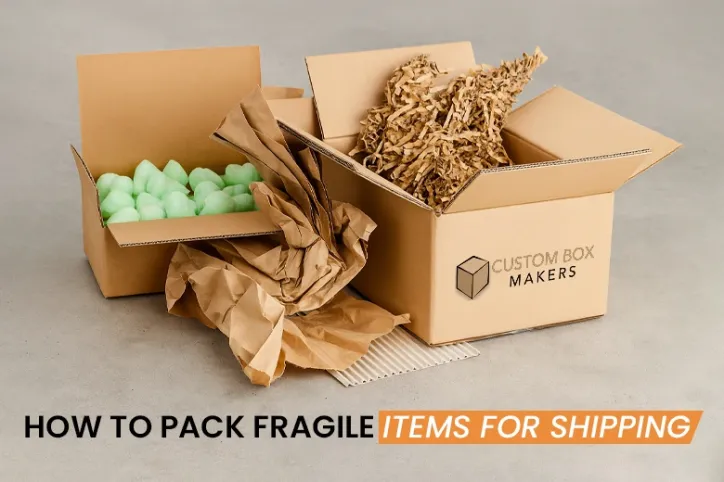
- Packing peanuts, crumpled kraft paper, or any other packaging fillers
- Heavy-duty packing tape
- A sturdy corrugated box
- Dividers or inner boxes for multiple items
- “Fragile” or “this side up” labels
If you ship on a regular basis, which means you have a business that demands careful and safe measures for shipping, then consider switching to custom box styles suitable for shipping fragile products.
Step-by-Step: How to Send Fragile Items Safely
Gathered the relevant stuff? It’s time to get hands-on.
Choose the Right Box
A sturdy box that can easily withstand the rigors of shipping, handling, or local transit will reduce the risk of product damage. Here you can use customized shipping boxes, an MVP in the supply chain, or printed mailer boxes that make e-commerce or retail businesses incomplete. The box should be larger than the item, so there will be enough room for padding all around.
Wrap Each Item Individually
Never pack fragile items together. I repeat, never try to pack delicate items altogether. Instead, you can wrap each of them individually in bubble wrap.
Reinforce corners and thin edges that are at the most risk. After that, fill the hollow spaces. It means that if you are packaging vases, fill them with paper.
This technique is helpful for people who always search for how to ship glass items or other antique pots that are not meant to break easily. You can also use tapes so the wrap does not loosen. This step alone greatly improves the safety of sending fragile items.
Create a Cushioned Base
The preparation above was for the product; now is the time to prepare the box in which it will travel. Before placing it in the box, add 2-3 inches of cushioning. It prevents damage from bottom impacts during drops or stacking.
Center the Item and Eliminate Movement
Place the wrapped product in the center of the box. Then fill the remaining gaps with high-quality packaging fillers, such as peanuts, paper, or foam. After this, shake the box, and if you hear any movement, you need to add more cushioning to make sure nothing rattles.
Consider Double-Boxing for Extra Fragile Products
The best way to ship fragile items, such as expensive or easily breakable ones, is to use the box-in-box method. It means packing the item into a smaller inner box, fully cushioning it, and placing that inner box inside a larger one with additional padding. This method absorbs harsh shocks and pressure.
Seal Properly
Use heavy-duty tape and seal the top and bottom in an H pattern. This professional-grade taping prevents the box from opening under pressure.
Label the Package Clearly
It is crucial to mark the box with “fragile,” “handle with care,” or arrows for orientation. Labels might not guarantee perfect handling, but they help reduce careless drops. People become more cautious when they see these kinds of labels.
Packing Different Types of Fragile Products (Because Not All Break the Same Way)
Once you have understood the basics of how to pack fragile items for shipping, it helps to consider different types of delicate products. Not all fragile items behave the same way, so it is essential to treat each one according to its nature.
For example, glass shatters from impact, candles and wax can easily dent or melt, ceramics chip easily, electronics react badly to vibrations, and small collectibles can crack if they collide.
While some items are hard, others are temperature-sensitive and require extra care, such as candles sold online, which are the e-commerce stars.
Here, the right way to ship and package candles should be ensured, as they may not break like glass but can dent, chip, and melt. Wrap each candle or jar individually, add cushioning, and use custom box inserts or dividers to hold them in place snugly.
Glass products such as jugs, pots, vases, decor pieces, and photo frames are extremely sensitive to pressure and vibrations. Wrap each piece tightly in bubble wrap, reinforce corners or stems, and pack flat items like plates vertically to minimize stress.
Ceramics, collectibles, and electronics can all benefit from similar careful wrapping, cushioning, and securing inside the box.
Similarly, certain items like baked goods can lose their shape, freshness, or presentation during transit if not packed properly. If you deal with edible products, follow our detailed guide on shipping baked goods or bakery products to ensure they arrive safely and in perfect condition.
Final Thoughts
Shipping fragile products does not have to feel risky. When you wrap items individually, cushion them well, eliminate movement, and use sturdy packaging, you can significantly reduce the chances of breakage. Even though each fragile product has its own weaknesses, the standard principle remains the same.
Wrap each item individually, cushion all sides, prevent any unnecessary movement inside, seal it securely, and label it.


