

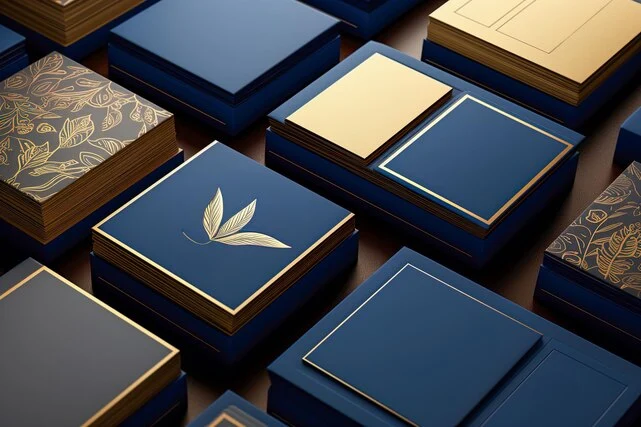

In the innovative world of printing and custom packaging, foiling techniques are among the most preferred. Yes, we are talking about hot foil stamping —the final touch that makes your printed materials look excellent, shinier, and more luxurious. Let’s take a closer look at this finishing touch!
What Is Hot Foiling?
Have you ever seen a business card with a shiny metallic logo? Or have you seen how some exclusive custom packaging boxes come with a gleam of gold or silver text? Well, that’s hot foil stamping doing the work.
So, what is hot stamping?
Hot foil stamping, foil stamping, or hot stamping — whatever you may encounter — is a printing technique that uses heat and pressure to apply metallic or colored foil to a printed material.
This technique creates a durable, premium finish that is well-suited to luxury packaging. In addition, this printing technique is an ideal choice for high-end branding and intricate designs.
How Does Hot Foil Stamping Work?
As the name suggests, hot foiling uses a heated die to press foil onto a substrate, transferring the design from the die to the material.

Here are the steps of the process.
- Design and die creation: A computer design is created and then transferred to a metal die, which is engraved with the exact design.
- Heating: Then, the metal die is heated to a precise temperature.
- Foil placement: Placing a roll of foil, consisting of multiple layers including a release layer, a color/metallic layer, and an adhesive layer, over the substrate.
- Stamping: The heated die is then pressed onto the foil, transferring the design onto the substrate. The heat melts the adhesive, and the pressure bonds it to the printed material, while the excess foil remains on the carrier roll.
- Finishing: Finally, the excess foil is removed, leaving the final design on the printed material. The pressure from the die can also create an embossed, three-dimensional effect.
Material Compatibility Guide for Hot Stamping
There are various materials compatible with hot foil stamping. Each material provides different results with this technique.
Here are the following materials that work best with hot foiling.
Paper and Cardstock
Paper and cardstock are excellent for custom boxes ranging from folding cartons to rigid boxes. Well, these materials are highly compatible with hot stamping. The best part? They allow the foil to bond smoothly, resulting in sharp, clean designs.
Kraft paper is a popular, eco-friendly option that is slightly rougher. Applying gold or silver foil on it creates a striking, rustic contrast.
Thicker cardstock, such as rigid stock, can create a slight embossing effect, adding texture to the foil. Meanwhile, lighter papers can produce precise results with the right temperature and pressure.
Plastics
A variety of plastic materials are also suitable for hot foil stamping.
For example:
- Polyester (PET): An excellent choice for labels and custom packaging due to its clarity and ability to bond well with foil.
- PVC: Often used for packaging, stickers, and business cards; its smooth surface allows the foil to adhere firmly.
- Polypropylene (PP): Known for its transparency, strength, and thermal resistance, PP is suitable for “no-label look” applications on cosmetic labelling and electronic packaging.
Which Designs Work Best with Hot Stamping?
If you’re thinking of applying your own, creative design on custom packaging or labels, some designs will look shinier and more exclusive with hot foiling.
What are they?
- Clean, bold graphics can produce the most amazing results with hot stamping.
- Brand’s name and logo will shine in metallic foil, creating immediate visual impact.
- Typography also excels with medium to bold weights that give the foil enough surface area to catch the light.
- Simple geometric patterns and decorative borders make metallic foil reflect light from different angles.
Keep in mind that simple designs often work better. On the other hand, intricate details or fine lines can be lost during the hot-stamping process. Hence, you should focus on designs that make the most of the foil’s reflective properties while maintaining clean, crisp edges.
Key Benefits of Hot Stamping
Hot foil stamping is a favorite finishing technique for valid reasons. This method even benefits your brand in many ways.
Here are the key benefits of applying hot stamping to your printed material.
Visual and Branding Benefits
- Luxurious finish: Creates a premium look with metallic and glossy finishes that make your products and packaging stand out.
- Enhanced brand perception: Elevates your product’s perceived value, making it appear more special and valuable.
- Durable and long-lasting: The foil is resistant to smudging and fading, creating a mark that lasts.
- Clean, sharp results: Produces crisp, precise, and highly visible details for your designs, logos, and text.
Practical and Flexible Benefits
- Wide material compatibility: You can use hot foiling on many materials, including paper, cardboard, plastic, and certain metals.
- Clean and efficient process: Unlike some ink-based printing methods, it’s a dry process that avoids the mess of liquid inks.
- Flexible design options: Available in a wide range of colors, and can create light-catching effects.
- Consistent high-quality results: Delivers consistent results on a wide variety of surfaces.
Hot Foil vs Cold Foil Stamping: What’s the Difference?
As you browse about hot foil, you may come across cold foil stamping. What’s the difference between the two?
In brief, hot foil stamping uses heat and pressure to transfer a metallic foil. The method results in a premium, often embossed finish ideal for luxury products.
Meanwhile, cold foil stamping uses a UV-curable adhesive and pressure from a standard printing plate to apply the foil. The process allows for faster, inline application, multi-color effects, and lower tooling costs.
Hot stamping vs Other Finishing Methods
Of course, there are other finishing methods to choose from, such as Spot UV coating, metallic ink, embossing/debossing, and cold foiling. Each method has its unique characteristics, depending on your desired result.
Here’s a comparison table to help you make the right decision.
Feature | Hot Stamping | Cold Foiling | Embossing/debossing | Spot UV Coating | Metallic Ink |
Effect | Premium, vibrant, metallic shine | High-shine metallic effect | 3D raised (emboss) or recessed (deboss) texture | High-gloss, protective layer on specific areas | Subtle metallic luster |
Durability | Long-lasting, scratch-resistant | Less durable, vulnerable to cracking | Permanent texture, but the paper itself can wear | Good protection, wear-resistant | Prone to cracking as the ink ages with metal particles |
Design | Ideal for intricate and complex designs | Suitable for simple and complex designs | Suitable for simple and complex designs | Excellent for fine detail and high contrast | Good for complex designs and fine details |
Why Choose Hot Foil Stamping for Custom Packaging?
Finally, the big question: why choose hot foiling for custom packaging?
Hot stamping is ideal for creating product packaging with a premium feel. It’s most commonly used on paper bags, gift boxes, and product labels, where presentation plays a great role in the customer experience.
Works on many materials; hot foil stamping makes coated paper, kraft paper, and specialty textured materials look more exclusive. Plus, this technique doesn’t smudge or fade. As a result, choosing hot foil stamping for your custom printed boxes can elevate your brand perception with a high-end, professional look.
Final Thoughts
No doubt, hot foil stamping is the final touch that makes your printed materials look excellent, shinier, and more luxurious. It’s a printing technique that uses heat and pressure to apply metallic or colored foil to a printed material. This finishing method creates a durable, premium finish that is well-suited to luxury packaging.
The key benefits of applying hot stamping to your printed material include a luxurious and high-end finish, enhanced brand perception, durability, and clean, sharp results.
In the end, choosing hot foil stamping for your custom printed boxes can elevate your brand perception with a high-end, professional look.
FAQs
What is hot stamping?
Hot foil stamping, foil stamping, or hot stamping is a printing technique that uses heat and pressure to apply metallic or colored foil to a printed material.
How does hot foil stamping work?
Hot foiling uses a heated die to press foil onto a substrate, transferring the design from the die to the material.
What are the benefits of hot foiling?
The benefits of hot stamping include a luxurious and high-end finish, enhanced brand perception, durability, and clean, sharp results.
Why choose hot foil stamping for custom packaging?
Hot stamping is ideal for creating product packaging with a premium feel, such as paper bags, gift boxes, and product labels.

