


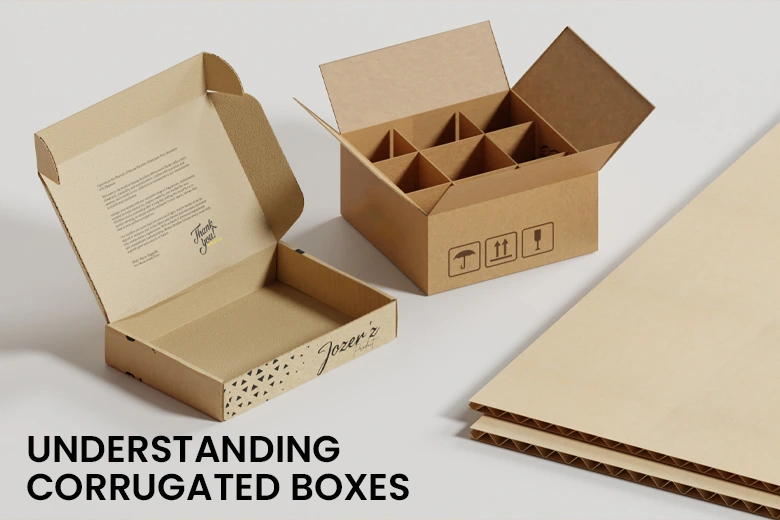

Corrugated boxes are a well-known name in the packaging industry, especially when it comes to shipping and storage.
From e-commerce packages to heavy industrial goods, these boxes make the whole delivery process safer. Many people often get confused between cardboard folding cartons and corrugated boxes.
However, they both perform differently. Corrugated lasts longer, can be reused, holds more weight, and protects fragile items better.
In this guide, we will help you understand what corrugated boxes are, how they work, and the types that you can choose from for specific purposes. And by the end of this blog, you will be able to pick the perfect one.
What Is a Corrugated Box?
There is no rocket science to differentiate a corrugated box from a cardboard corrugated box. A corrugated box is simply a shipping container made to protect products during transport and storage.
It has three layers. Two flat outer layers are called liners, and a wavy mid-layer is called a flute. The flute acts like a cushion. It absorbs shocks, prevents crushing, and keeps the products safe. Whereas, a corrugated cardboard box is another way people describe a corrugated box.
- A regular cardboard is a single flat sheet of paperboard. It works for light or decorative packaging but does not provide as much protection as a corrugated box.
- A corrugated box is made of multiple layers, including wavy flutes. It is much stronger, holds heavier products at once, and cushions fragile items.
Difference Between Corrugated and Cardboard
| Feature | Cardboard | Corrugated |
| Layers | One (if more layers, it will become a rigid setup box) | Multiple (liners and flutes) |
| Strength | Low | High |
| Cushioning | Minimal | Strong |
| Best for | Small, lightweight items | Shipping, storage, fragile or heavy items |
Corrugated Types & How They Affect Performance
Unlike other packaging material types, corrugated is not made of a single straight material. Instead, it is made with a strategy to perform under extreme shipping and handling conditions.
This all depends on the materials used in its construction and the design of its layers, or how they are used.
Corrugated Liner Types
Here, we are discussing the outer layers of the corrugated box. It can be customized with your brand name, logo, or messages that need to be read directly for recognition. The most common types of liner include
- Kraft Paper—It is made from virgin paperboard, which makes it stiff, durable, and a bit costly.
- Test Paper—Test paper liners use more recycled fibers, which makes them lighter and less strong than Kraft paper.
- Specialty Liners—Specialty liners come coated to resist moisture, printed for branding, or made from strong materials.
Flute Types
Flutes are the wavy layers that are found in the middle of two liners in a corrugated box. It is crucial to understand flutes extensively to make informed decisions. Different flutes suit different needs, such as cushioning, stacking strength, and customization.
- A-Flute
A-flute has the largest and tallest waves, with an average thickness of about 1/4 inch. These tall flutes create strong cushioning and absorb shocks very well.
- B-Flute
B-flute uses smaller, tighter waves with a thickness of about 1/8 inch. Ideal for retail packaging, it provides good strength while keeping the box compact.
- C-Flute
C-flute sits between A and B in size, with an average thickness of about 3/16 inch. It offers a balance of cushioning and stacking strength.
- E-Flute
E-flute is much thinner, measuring about 1/16 inch thick. It creates a smooth and clean surface that supports high-quality printing.
- F-Flute
F-flute is the thinnest common flute, measuring around 1/32 inch. It supports very fine printing and gives boxes a premium look.
Wall Construction
The liners and flutes work together to form a corrugated box. These flutes and liners are stacked in layers for added strength and to increase the thickness range.
- Single Wall Corrugated Boxes
Single-wall boxes contain one layer of flutes placed between two flat liners.
- Double Wall Corrugated Boxes
Double-wall boxes contain two layers of flutes with three liner sheets.
- Triple Wall Corrugated Boxes
Triple-wall boxes use three layers of flutes and four liner sheets, creating maximum strength.
Corrugated Box Styles Explained
The corrugated boxes we commonly see are not the only ones available in the market. However, they are categorized according to the purposes they serve. The right corrugated box style, when used in the right application, can help save a lot of time, money, and effort.
RSC (Regular Slotted Container)
The RSC is the most widely used corrugated box style. It has flaps on the top and bottom that meet at the center when closed.
This design uses minimal material while still providing good strength, especially when boxes stack on pallets. RSC boxes work well for shipping, storage, and general-purpose packaging across many industries.
One-Piece Folder (OPF)
A one-piece folder uses a single sheet of corrugated board that wraps around the product. This style provides extra protection on the sides and edges.
This makes it ideal for flat or narrow items like books, frames, or electronics. Because the box folds tightly around the product, it reduces movement and lessens the need for custom packaging inserts.
FOL (Full Overlap Container)
FOL boxes have flaps that completely overlap when closed, creating double-thick walls on the top and bottom.
This overlap increases compression strength and helps protect heavy or delicate items from impact. Businesses often use FOL boxes for industrial products or shipments that face rough handling.
HSC (Half Slotted Container)
An HSC looks similar to an RSC but only has flaps on one side. This design allows easy loading and unloading, making it useful for trays, stacked items, or display-ready packaging. Many warehouses use HSC boxes for storage and internal handling.
Telescope Box
A telescope box consists of two separate pieces: a top and a bottom that slide over each other. This design allows flexibility in height and provides added protection along the edges and corners.
Telescope boxes work well for tall, fragile, or oddly shaped products that need full coverage and easy access.
Performance & Testing Metrics
Before shipping products, manufacturers test corrugated boxes to see how much weight, pressure, and stress they can handle.
These tests help businesses choose boxes that protect products during stacking, transport, and handling. The three most important tests are
Edge Crush Test (ECT)
The Edge Crush Test measures how much weight a box can handle when pressure is applied from the top downwards.
In simple terms, it shows how strong the box walls are when boxes stack on top of each other. The test applies force to the edge of the box until it bends.
A higher ECT rating means the box can support more weight without collapsing. Warehouses and shipping companies rely on ECT ratings to decide how high they can stack boxes on pallets.
Mullen (Burst) Test
The Mullen test measures how much pressure a box can withstand before it bursts or breaks. During this test, pressure pushes outward on the box surface until the paper ruptures.
This test focuses on the strength of the linerboard rather than stacking strength. Boxes with higher Mullen ratings perform better when they face rough handling, sharp impacts, or heavy contents. Many industries use this test when products are shipped under unpredictable conditions.
Flat Crush Test
The Flat Crush Test checks how well the fluted layer resists being flattened. During the test, force presses are applied directly onto the flute until it collapses. Strong flutes keep the box sturdy and help it maintain its shape.
This test matters because crushed flutes reduce cushioning and stacking strength. Boxes with strong flat crush resistance perform better in storage and long-term stacking situations.
Why These Tests Matter
These tests help businesses choose the right shipping box for their needs. The stronger the boxes, the better they will perform in real-world conditions.
Boxes with higher test ratings are likely to reduce returns, avoid customer complaints of product damage, and lower the replacement costs. It also ensures safety for workers who handle stacked boxes in warehouses.
Advantages of Corrugated Boxes
Corrugated boxes are popular in the packaging industry due to their protective and durable nature. They are strong yet sustainable, which is another reason why they are widely used.
Especially when the concern is to provide an added shield to the product during transportation, handling, and storage, corrugated boxes are the go-to choice. Best for e-commerce and retail packaging, these boxes can be customized and do not limit the option of branding.
But what about its disadvantages?
Along with its numerous pros, yes, there are some cons as well. Due to their construction from paper and eco-friendly materials, corrugated boxes do not perform well in wet or humid conditions. They can easily deform or lose their structural strength if exposed to rain or moisture.
Moreover, when single-walled corrugated boxes are used, the risk of product damage might increase if the transit route is long. In addition, the cost of corrugated boxes can be higher than that of traditional packaging options.
FAQs
Can I reuse corrugated boxes?
Yes. Dry, undamaged boxes can ship multiple times.
What box type is the strongest?
Triple wall corrugated boxes are the strongest type among all. They often replace wooden crates in heavy-duty applications.
What is a 3-ply corrugated box?
A 3-ply box has two layers of linerboard with a single fluted layer in between, making it suitable for lightweight to medium products that weigh between 4 and 15 kg. In comparison, a 5-ply box contains three linerboards and two fluted layers, giving it extra strength and durability to safely hold heavier items weighing 20 to 45 kg.
What is the difference between a corrugated box and a cardboard box?
Cardboard is a single-layered thick packaging often known as folding cartons, while corrugated cardboard boxes are multi-layered with a wavy flute and two flat linerboards. Their significant difference is that cardboard is flat and thinner, whereas corrugated is crafted with air pockets to offer cushioning, ideal for heavy-duty packaging.
What is the difference between single, double, and triple walls?
Single wall has one fluted layer between two linerboards, double wall has two fluted layers between three linerboards, and triple wall has three fluted layers between four linerboards.
How do I know which flute type to use?
Match flute type to product weight and fragility. A-Flute cushions fragile items. C-Flute balances strength and cost.
Conclusion
Corrugated boxes protect products, reduce shipping damage, and can even enhance your brand. Choosing the right materials, flutes, wall construction, box style, and size ensures your items arrive safely. Add inserts, proper printing, and eco-friendly materials for even better results.

