


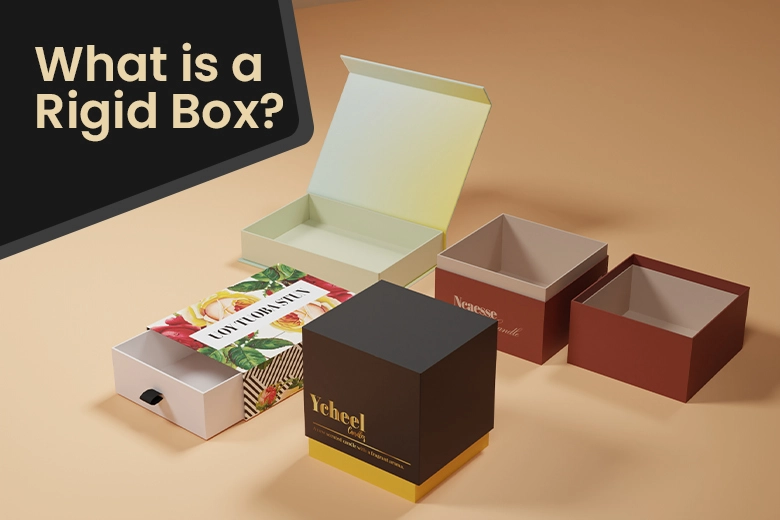

A rigid box, also known as a setup box, is a type of packaging that is made from thick paperboard and chipboard to provide maximum protection to the products. Unlike folding cartons, rigid boxes maintain their shape, do not collapse, prevent any dents, and have a premium feel.
They are widely used for luxury products where presentation and protection are important. Understanding their types, manufacturing, and benefits helps businesses choose rigid setup boxes for their products if needed.
Let’s discuss in more detail how rigid boxes are made, their trendy styles, how they influence buyers, and where to use them.
How Are Rigid Boxes Made?

Manufacturers begin rigid box production by carefully selecting paperboard and gluing multiple layers together to achieve strength and sturdiness.
It typically ranges from 1.2 mm to 3 mm in thickness. The structure also gets sturdier when duplex chipboard is added.
These solid frames are then wrapped in specialty papers such as SBS, natural kraft, or holographic and metallic.
All of your desired printing, finishes, and coatings are done on the wrapping, and it is glued to the box. And here we are done!
You can break down the whole manufacturing process into four simple steps that are
- Sizing
- Folded for frame structure
- Printing
- Wrapping
Other embellishments to make your rigid boxes more appealing include
- Embossing
- Debossing
- Foil stamping
- Spot UV
- matte/gloss lamination and varnish
- Addition of ribbons, magnetic closures
Various High-End & Popular Rigid Box Styles
Rigid boxes come in many styles, and each option has its unique features. From openings to their structure, each box is different and offers an innovative unboxing experience.
Telescopic boxes
A classic design with a separate lid and base. Perfect for gifts and luxury items. The lid fits snugly over the base. The elongated design of the telescope box is perfect for jewelry items like chains, necklaces, and anklets.
The lid fits snugly over the base, and thick paperboard keeps the box solid. Wrappings add colors, patterns, and brand-focused messages. Each box can feel sturdy and premium thanks to easy access to products.
Rigid book boxes
This innovative box style has a lid that is attached to the base and opens like a hardcover book. These book-style boxes are preferred for preserving books and upgrading their presentation.
Brands add inserts or dividers to organize products beautifully and showcase them effectively. Their robust construction keeps the content safe, and the elegant design enhances the value of your books.
Drawer-style boxes
An inner tray slides smoothly out of the outer sleeve, revealing the contents in a playful and engaging way. Brands arrange items inside the tray to keep them protected and perfectly organized.
Magnetic closure boxes
Hidden magnets secure the lid, ensuring a smooth, luxurious closing experience every time. You can wrap the box with decorative papers, finishes, or embossed logos to elevate its premium appearance.
Collapsible boxes
These boxes fold flat for storage and shipping and assemble into a strong, rigid structure whenever needed.
Difference Between Rigid Boxes vs Folding Cartons vs Corrugated Boxes
Compared to other packaging types, rigid boxes have distinct advantages and uses. Comparing can easily clarify the differences; however, one basic concept that is considered here is that every product should be packaged in its respective packaging.
| Feature | Rigid boxes | Folding cartons | Corrugated boxes |
| Material | Thick, sturdy paperboard | Thin, lightweight paperboard | Fluted cardboard, single to triple-walled |
| Strength | Very strong, keeps shape | Moderate, can bend easily | Strong, made for shipping |
| Protection | Excellent for fragile items | Medium, light products only | Excellent for heavy or bulk items |
| Look & presentation | Premium and luxurious | Simple, printed with designs | Basic, but functional |
| Cost | High | Low to medium | Low to medium |
| Assembly | Preassembled | Ships flat, folds easily | Ships flat, folds easily |
| Reusability | Can be reused | Rarely used | Can be reused |
| Logistics | Bulky with higher shipping and storage costs | flat, space-efficient | Flat, space-efficient |
Industries Using Rigid Boxes
Rigid boxes are preferred when product protection and a premium presentation are required. Despite their cost, brands choose them because they are sustainable and give off a luxurious feel from the moment consumers pick them up. Some of the industries are
- Luxury Goods—Jewelry, watches, and high-end accessories
- Cosmetics & Beauty—Perfumes, skincare, and makeup products
- Electronics & Gadgets—Smartphones, headphones, and small electronics
- Food & Confectionery—Chocolates, specialty sweets, and gourmet items
- Apparel & Accessories—Premium clothing, scarves, and designer accessories
- Gift & Promotional Products—Corporate gifts, limited editions, subscriptions, and PR boxes.
Pros & Cons of Rigid Boxes
After understanding a wide range of packaging choices and comparing them, we now have a clear image of what and where to choose one. The pros of rigid boxes are that they can undoubtedly win wherever they are used.
Their sturdy build, options for customizations, and, if they are paired with custom inserts, they can be the best choice. As soon as your consumer holds rigid packaging, they associate the product with luxury and brand.
Today’s consumer enjoys gifts and is instantly impressed if they come in a rigid box. While this packaging solution is versatile and offers numerous benefits for branding and presentation, it also has some disadvantages.
It is the price and cost that not every person can afford. Furthermore, their manufacturing process also takes time, leading to deliveries sometimes being late.
In some cases, folding cartons also win due to their attractive appeal that looks good in any setting, but they also come with their own sets of pros and cons.
Summing Up!
Rigid boxes play an important role in packaging where strength, presentation, and quality matter. Choosing the best one for your high-end product can instantly enhance its value and showcase the care and attention your brand has put into packaging.
This does not mean other packaging solutions are not good enough. But every other option should be selected with the product’s nature in mind.


